
It took Krishna Raja Wodeyar III most of his adult life to compile a treatise on the iconography of Hindu Gods and other divine beings of South India. The treatise, called Sritattvanidhi, is most popular as the treatise that contains (and details) 122 Yogic poses in one of its texts, the Kautuka Nidhi.
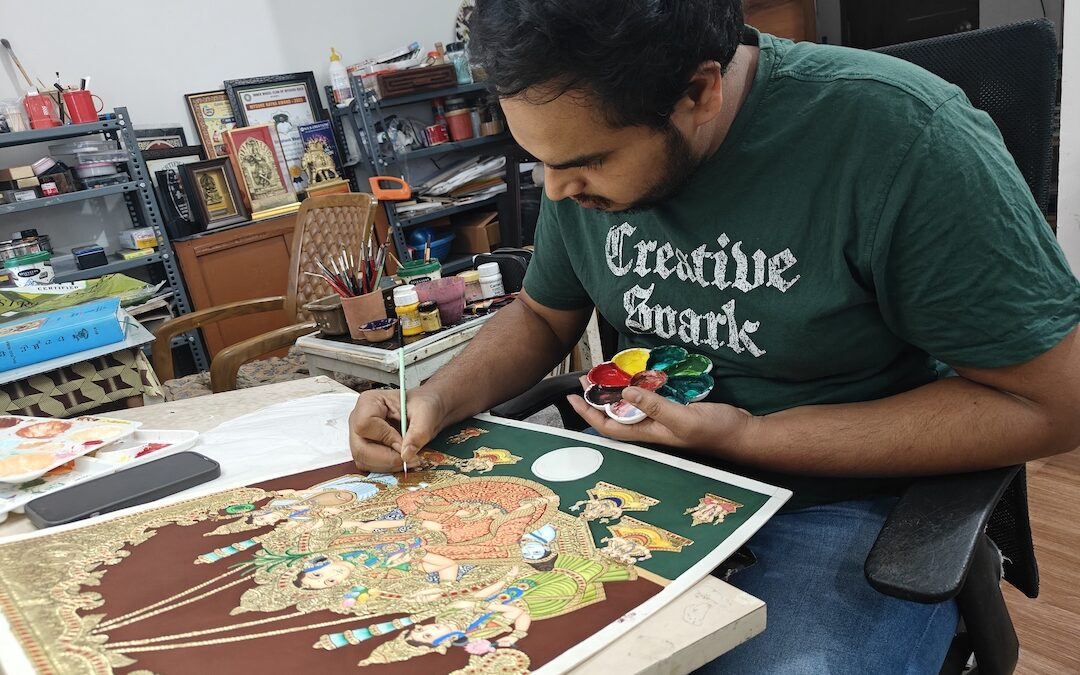
However, Mysore artist Shashank Bharadwaj is referring to the Shiva Nidhi to create his work. Mysore paintings look like Tanjore paintings, but is more intricate than its cousin. Also, the gold embossing is not as high and is almost level with the medium, which, these days, is canvas board.
“The proportion, divine weapons, and even jewellery, is specified in these texts,” says Shashank. The king, it is said, consulted hundreds of texts to collate the information regarding iconography contained within each text, much like today’s AI trawls websites!
It is this art of his native Mysore that drew Shashank to the Mysore art tradition, from his job in IT. With a family background in classical music, it was but natural that he took to this with fervour. He had a lot to learn as well.
Mysore artist at work
However, it is not all rules and proportions. Shashank creates some experimental art as well, using the techniques that Mysore paintings use. When we visit him, a book on Picasso lies on his sofa.
“There is so much in this tradition. We have to remember to do good work and carry on its illustrious history,” Shashank says.
These days, Shashank, in association with Mysore’s Oriental Research Institute, is researching Ganjifa cards, a card game that features different styles of cards and play.
Club Artizen’s journals and boxes feature animal motifs that bring the elegance of the Mysore painting to your desks!
<hr />
<h1>Our Mysore Art Products</h1>
Etikoppaka is a small village about 1 km square on the banks of the river Varaha. It’s what the name translates to: a group of homes on the river’s edge. Its name conceals what it’s known for: it is where one of India’s finest wood crafts is made.
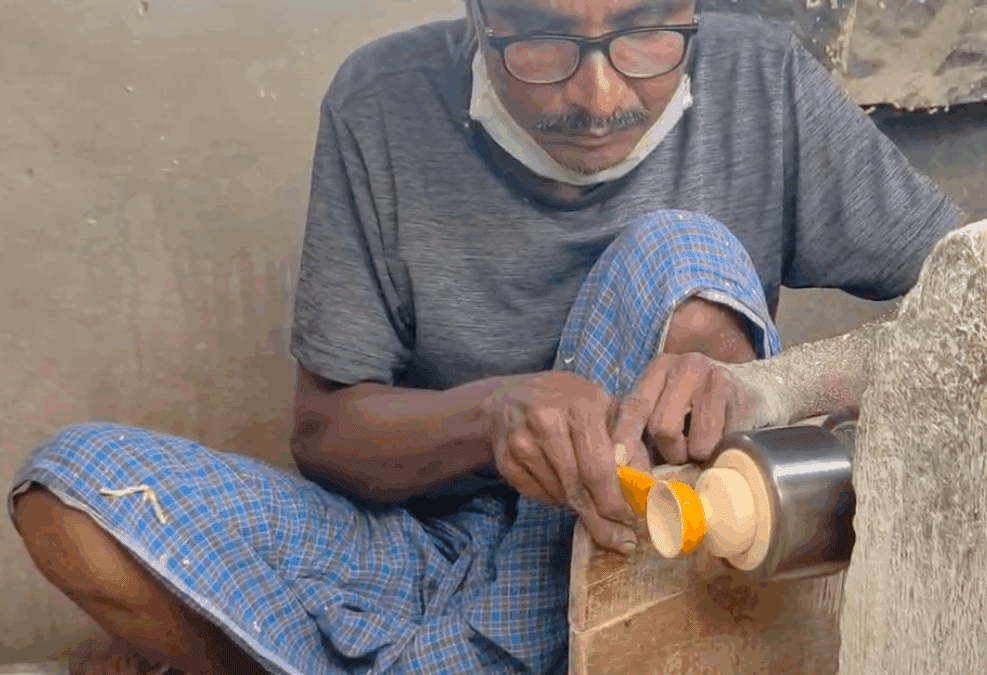
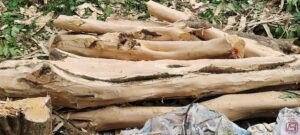
There are about 100 artisan families in the village, working on and practicing the craft. Similar to its Karnataka cousin, the more famous Channapatna, the artisans work on natural ivorywood (botanical name: Wrightia tinctoria) to create the striking pieces.
Nani Pedapati, Club Artizen’s partner, does not remember a time when the household did not make Etikoppaka toys.
‘Must be generations old,’ he says. His family, like most others, are all involved in the making of the Etikoppaka products. History traces the craft back to the 18th century, when it moved to its current location, having proximity to the Rajah of Vijayanagara, great patrons of the art.
The process is done from start to finish in and near the village: the wood is harvested, the dyes made naturally, and the toys shaped and coloured. The basic colours are made through natural methods: boiling the seeds of the Bixa tree provides the red colour, while turmeric is used for yellow and indigo for blue. Iron rust and jaggery combined yield the characteristic black used for minute painting on the toys.
While many families have had to resort to acrylic colours, a few families, like Nani’s, stick to natural dyes. ‘It’s a time-consuming process, and each toy is worth it, being sculpted by humans,’ says Nani.
Earlier, the craft mainly made toys; however, of late, different products are being explored.
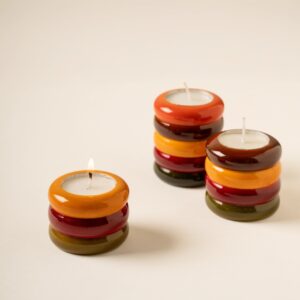
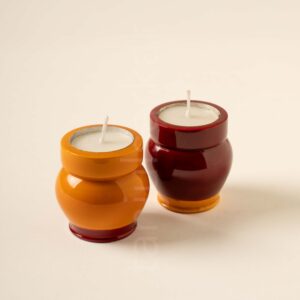
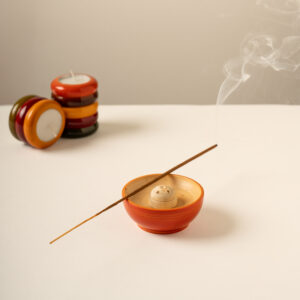
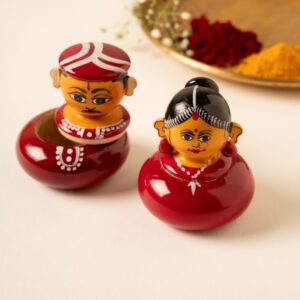
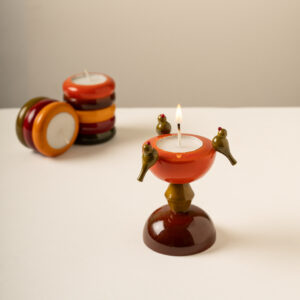
Club Artizen partners with Nani Pedapati’s family to offer festive products that signify prosperity and well-being. Our tealight holders are a perfect fit for festive hampers, and the bride and groom set is a perfect wedding return gift.
Our Etikoppaka Products
When Rohit Rathod’s grandfather came to see his grandmother to seek her hand in marriage, his family did not see the prospective bride. Instead, they looked at the embroidery of her attire! Rohit says it told them all they needed to know about the girl: her attention to detail, her sense of aesthetics, and whether she would be a good daughter-in-law.
‘We cannot try that now,’ laughs Rohit, whose initiative focuses on reviving the traditional embroidery form, ‘but you can imagine how important the craft was in those days.’
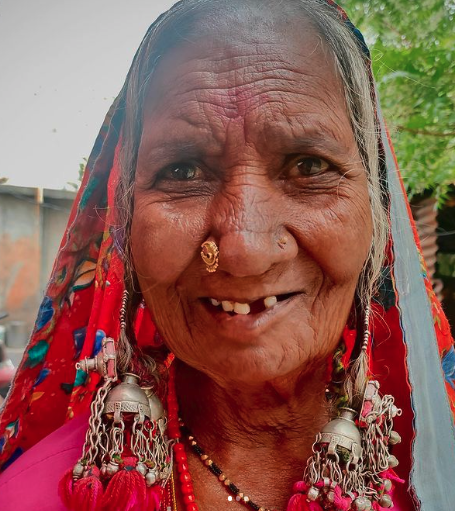
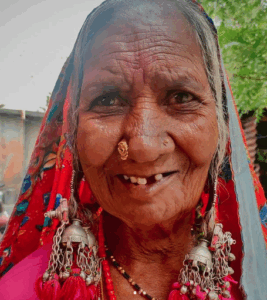
Banjara embroidery is a distinct form of needlework characterized by the addition of accessories, such as cowrie shells, mirrors, coins, and other embellishments, to the main stitches. Patchwork and bright colours with a predominance of red are hallmarks of Banjara embroidery.
Rohit started creating Banjara embroidery products with a modern twist. All women of his village, and indeed, of his community, know how to do Banjara embroidery, but very few thought of it as having any commercial value, he says.
‘In fact, they gave away many of their heirloom embroidery products in exchange for things like stainless steel plates. They were so innocent of its real value,’ says Rohit.
Rohit was inspired by his grandmother to take on the popularization of the craft and to revive it to his heyday. This was around four years ago, when COVID had struck. He started out small, with his family. First, he learnt all the embroidery stitches, around 70 of them, from his grandmother. He then started training women in his village. They already knew basic embroidery, and all he had to do was train them on some more traditional factors of the craft, and on finishing. He currently works with 25 artisans and counting.
Ironically, when he trains, he has to train women to go back, to when their grandmothers did the embroidery. ‘The craft itself changed over time, and more mirror work crept in. In our traditional embroidery, the stitches are different, and we work on cotton,’ he says. He is trying to bring back the OG form of banjara embroidery, albeit with better finish.
Rohit is hoping for the new generation to pick up Banjara embroidery not just as a one-off statement, but make it a part of everyday life. Towards that end, he wants to focus on functional Banjara embroidery products and Banjara embroidery gifts.
Talking about the partnership with Club Artizen, he says the design inputs given, especially for the Banjara embroidery luggage tag, were very helpful. ‘Our bestsellers are jewellery, and because we are surrounded by it, we sometimes cannot think beyond what we have seen. We are happy that Club Artizen is able to give us new ideas for our products,’ he says.
<hr />
<h1>Our Banjara Embroidery Products</h1>
If you ever walk into Sai Kiran Dhanalakota’s home in Hyderabad, the first thing you notice is the colour. Brushes, half-finished scrolls, wooden masks drying in the sun — all part of a fading world that his family has kept alive for generations. Cheriyal painting isn’t just an art form here; it’s how stories were once told. Before cinema, before books in every hand, wandering storytellers would carry long painted scrolls made by families like his, singing epics from one village to another.
Sai Kiran grew up watching his parents mix tamarind seed paste and white mud to prepare cloth for the scrolls. No canvas, no factory colours. The cotton is coated, dried, coated again, and only then does the drawing begin — strong black outlines, then vivid reds, blues and greens made from natural pigments. Every figure has wide eyes and rounded faces, every scene crammed with life — gods, farmers, animals, brides on palanquins.
After the traveling scrolls were replaced by other items that told stories: boxes (and now panels, ironically), the art moved to different mediums: as masks, art plates, on products, on canvas, and on cloth.
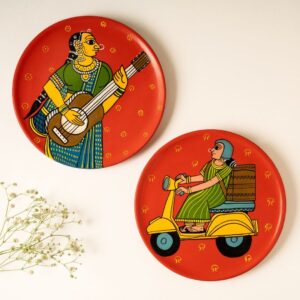
With Club Artizen, Sai Kiran and his family have experimented with different products reflecting the ethos of sustainability. Old, unwanted CDs became tealight holders with Cheriyal figures dancing around the flame. Coasters with mythological characters and village scenes found their way to city homes. And then came the playful series — a Cheriyal woman riding a scooter, and playing the guitar. Still the same big eyes, still the same red background, but living in today’s world.
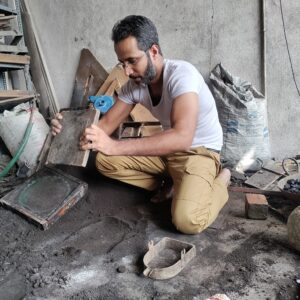
After school, Taher Siddiqui, then nine, would go directly to the karkhana (factory), helping his father with the craft that would come to define his life: Bidri art. Now, his son does the same.
Bidri, which means “from Bidar” is an art form that has its roots in Persia and is part of what is called Koftgiri art, i.e. inlay of one metal (usually gold or silver) on to another metal, mostly iron. This art was greatly encouraged by the Bahmani Sultanate, and flourished under their rule in the 14th and 15th centuries.
Bidriware has been part of Indian art and craft since then, and even as kingdoms changed, the art form grew in strength and complexity. Today, it is a GI-tagged art form that has evolved over time and is looking at a shinier future.
Taher Siddiqui is part of that future. He does not remember how many generations have been working on the craft, but says he recently came across a paper from 1917 for a Bidri workshop registered in the name of his grandfather. After having trained under his father, he then studied abroad, before returning to India to take the field of Bidri further.
‘I always knew I would work here, in this craft. It’s in my blood,’ he says. Taher Siddiqui, whose company Mahboob Bidri Craft works on various new products, is also the laboratory for new ideas.
Taher is full of them. He works with corporates to provide bulk gifting, and also creates large artistic pieces that bend reality. His pieces have won several awards including a Global Impact Award given by Creative Dignity and the AD x JSW Prize for Contemporary Craftsmanship.
With Club Artizen, he and his team have created several accessories for men, including tie pins and cuff links.
While creating masterful ideas, Taher is also mindful of the toll the craft takes on its practitioners, including inhalation of smoke during the smelting process, accidents during buffing and smoothening processes, and other occupational hazards.
Club Artizen’s partnership with Mahboob Bidri Craft is envisaged as a deep relationship that will work to maximize the potential of the craft itself.
In the quiet village of Zura, the rhythmic clang of hammer on metal still echoes through the lanes. Here, in his workshop, Javed Abdullah shapes sheets of iron into the famous Kutch bells, a craft his family has practiced for generations.
When we met him for Club Artizen, Javed was almost bemused by the attention.
“We have been doing this for many, many generations,” he said with a smile. Along with Zura, only two other nearby villages still make these distinctive bells.
Traditionally, the bells were tied around the necks of cattle, goats, and the like. Each had a unique size and tone, identifying not only the type of animal but also its owner. Today, their role is mostly ornamental—though farmers and shepherds still use them in parts of Kutch.
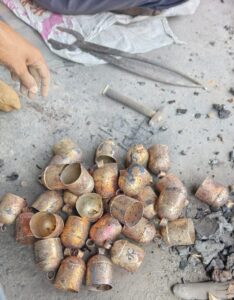
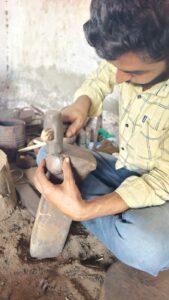
The craft is a community effort. While the men beat iron sheets into shape, the women of the Lohar community prepare the clay coating that is vital to the process. The bells are first hammered into their required form, then coated in a copper–brass mixture. A sleeve of clay-dough is applied before they are fired in a kiln. In the heat, the metal alloy melts and fuses with the iron. When the clay casing is broken away, the finished bell emerges—gleaming, resonant, and ready to sing.
Over the years, the uses of Kutch bells have expanded. Musical instruments, wind chimes, and decorative pieces now make up much of the artisan’s livelihood. For Club Artizen, Javed and his team have added a special touch—hand-embroidered sleeves that turn each bell into a perfect festive gift.
As Javed recalls, “My grandfather could identify his cows just by the sound of their bells. Today, even cowherds want their animals to wear something beautiful.” In every chime, the Kutch bell carries not just a sound, but the heartbeat of a living tradition.

 While many families have had to resort to acrylic colours, a few families, like Nani’s, stick to natural dyes. ‘It’s a time-consuming process, and each toy is worth it, being sculpted by humans,’ says Nani.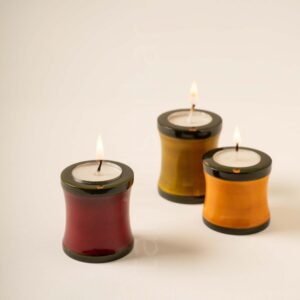
 Rohit started creating Banjara embroidery products with a modern twist. All women of his village, and indeed, of his community, know how to do Banjara embroidery, but very few thought of it as having any commercial value, he says.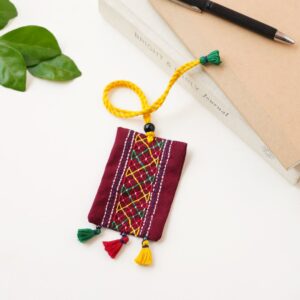

 Sai Kiran grew up watching his parents mix tamarind seed paste and white mud to prepare cloth for the scrolls. No canvas, no factory colours. The cotton is coated, dried, coated again, and only then does the drawing begin — strong black outlines, then vivid reds, blues and greens made from natural pigments. Every figure has wide eyes and rounded faces, every scene crammed with life — gods, farmers, animals, brides on palanquins.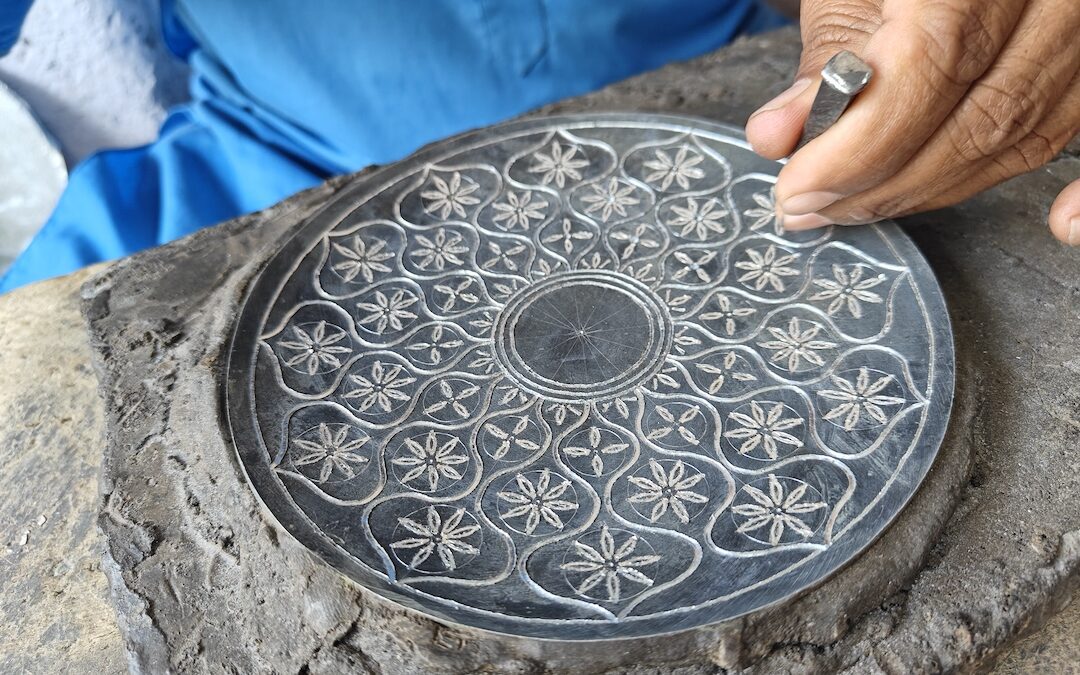
 Bidriware has been part of Indian art and craft since then, and even as kingdoms changed, the art form grew in strength and complexity. Today, it is a GI-tagged art form that has evolved over time and is looking at a shinier future.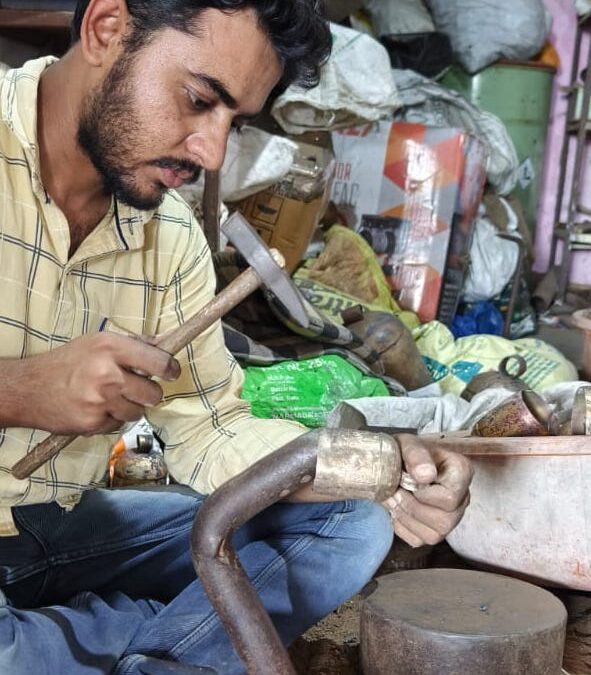
 The craft is a community effort. While the men beat iron sheets into shape, the women of the Lohar community prepare the clay coating that is vital to the process. The bells are first hammered into their required form, then coated in a copper–brass mixture. A sleeve of clay-dough is applied before they are fired in a kiln. In the heat, the metal alloy melts and fuses with the iron. When the clay casing is broken away, the finished bell emerges—gleaming, resonant, and ready to sing.