
It took Krishna Raja Wodeyar III most of his adult life to compile a treatise on the iconography of Hindu Gods and other divine beings of South India. The treatise, called Sritattvanidhi, is most popular as the treatise that contains (and details) 122 Yogic poses in one of its texts, the Kautuka Nidhi.
However, Mysore artist Shashank Bharadwaj is referring to the Shiva Nidhi to create his work. Mysore paintings look like Tanjore paintings, but is more intricate than its cousin. Also, the gold embossing is not as high and is almost level with the medium, which, these days, is canvas board.
“The proportion, divine weapons, and even jewellery, is specified in these texts,” says Shashank. The king, it is said, consulted hundreds of texts to collate the information regarding iconography contained within each text, much like today’s AI trawls websites!
It is this art of his native Mysore that drew Shashank to the Mysore art tradition, from his job in IT. With a family background in classical music, it was but natural that he took to this with fervour. He had a lot to learn as well.
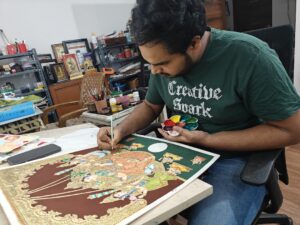
Mysore artist at work
However, it is not all rules and proportions. Shashank creates some experimental art as well, using the techniques that Mysore paintings use. When we visit him, a book on Picasso lies on his sofa.
“There is so much in this tradition. We have to remember to do good work and carry on its illustrious history,” Shashank says.
These days, Shashank, in association with Mysore’s Oriental Research Institute, is researching Ganjifa cards, a card game that features different styles of cards and play.
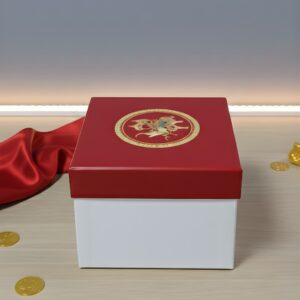
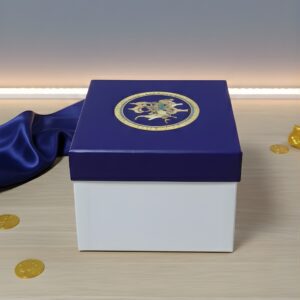
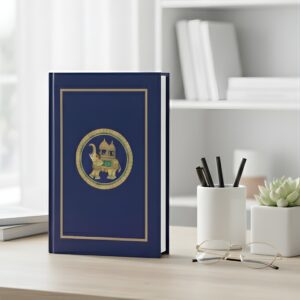
Club Artizen’s journals and boxes feature animal motifs that bring the elegance of the Mysore painting to your desks!
<hr />
<h1>Our Mysore Art Products</h1>