The word “Channapatna” literally means “good town”, but the more colloquial name for it, gives a better idea of what the town is all about: “Gombegala ooru,” or place of toys!
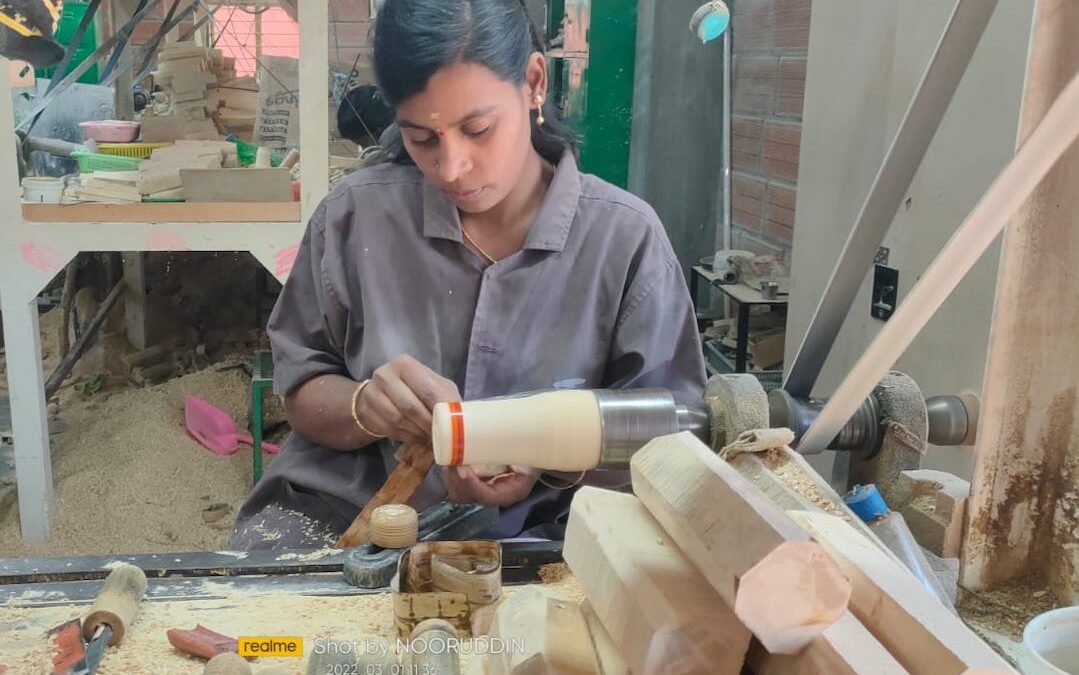
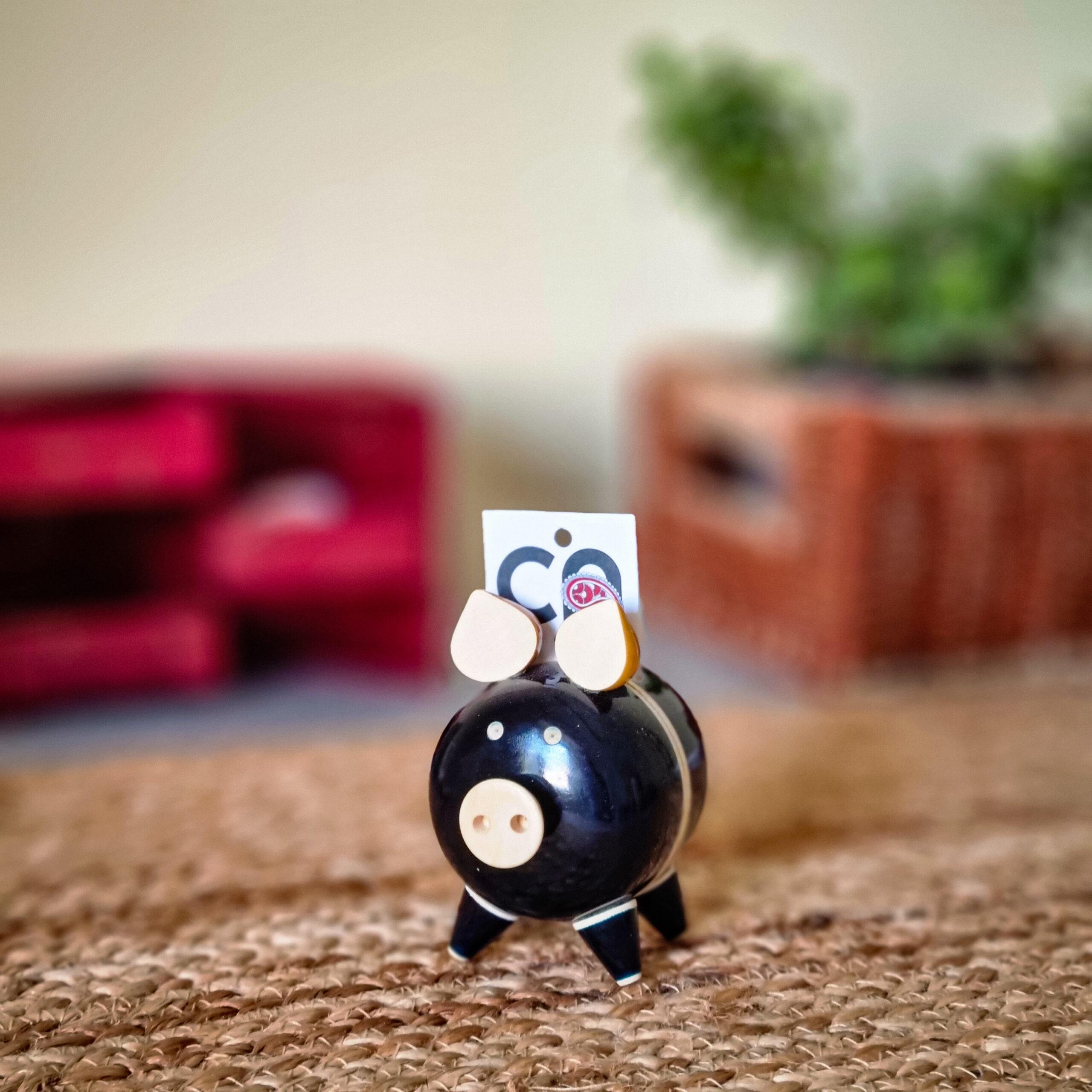
Channapatna is known for its wood lacquered toys, made using natural colours. Safe for children, these toys are popular in India and abroad. The streets of the town are full of the toys, and there is also a craft park that spotlights artisans.
One organization stands out for the way it has structured the economics of it all: Artisan’s Pride, a producer company that the artisans own.
Uma, 38, who has been with Artisan’s Pride for the past fifteen years, says she is happy about the new development. “It feels good that we are part owners of this organization we have been with for so long.”
While women like Uma were from the region, and knew about the traditional Chennapatna toys, they did not know how to make them. Now, with Artisan’s Pride, they are deeply embedded in the ecosystem of the Chennapatna toys.
Artisan’s Pride is careful about the environment, ensuring that they procure wood, colours, and other materials only from sustainable sources. They only harvest hale wood from non-farm non-forest lands, and use only natural dyes such as turmeric, Kumkum and indigo. All colours are blended from this. While this means that the toys do not feature billions of colours, as other toys, it also means that they are super safe for children.
Jaipur prints, for many of us, bring to mind one type of print, perhaps the ones we see in bedsheets.
However, when you talk to Kairavi Shahu, founder of Leera, you realize the mind boggling variety of printing, dyeing, and stitching techniques practiced in just one part of Rajasthan! The richness of Indian textile art hits you once again.
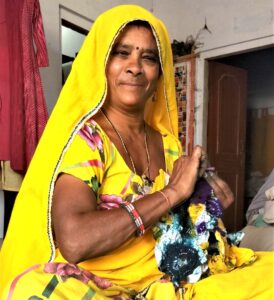
Leera (Livelihood Empowerment and Encouragement of Rural Artisans), a social enterprise founded by Kairavi during COVID, transforms fabrics that are created using tradition hand-made techniques—Bandhni, Shibori, Sanganeri, and embroidery—into contemporary products. Incidentally, “leera” also means “scraps of fabric” in Marwari, a concept close to what the organization seeks to do.
A graduate of textile design from the National Institute of Fashion Technology, Chennai, Kairavi visited Sujangarh for her graduation project, and simply stayed back.
She works with rural women, and is trying to revive the craft of dyeing by hand and hand block printing, among other traditions.
One of these women is Rubina Sultana, who joined Leera in 2021. A graduate of biology, Rubina married into the village of Bichoon near Jaipur, and was looking for opportunities to work, when someone told her about Leera. She came in and worked hard, and is now one of the artisans who works on new product designs with Leera.
“When I came in, I didn’t know much. Slowly, I learnt many techniques including patchwork,” she says. She earns around Rs. 25,000 some months, and has graduated to training other artisans as well.
Kairavi says this is what the organization seeks to do—to create artisans who can take leadership roles. Some women are unable to step out of their homes, and they are able to work at home on a per-piece rate as well.
With two units each in rural Sujangarh and in Bichoon, Leera has 25 artisans on their payroll and over 400 of them work from their home, as of 2023.
Their specialty? Products made using the Shibori technique. According to accounts, the Japanese Shibori technique of resist dyeing was brought to India by Rabindranath Tagore. It has found a lot of traction within Indian dyeing techniques, as it allows for a more versatile pattern than the Bandhni technique.
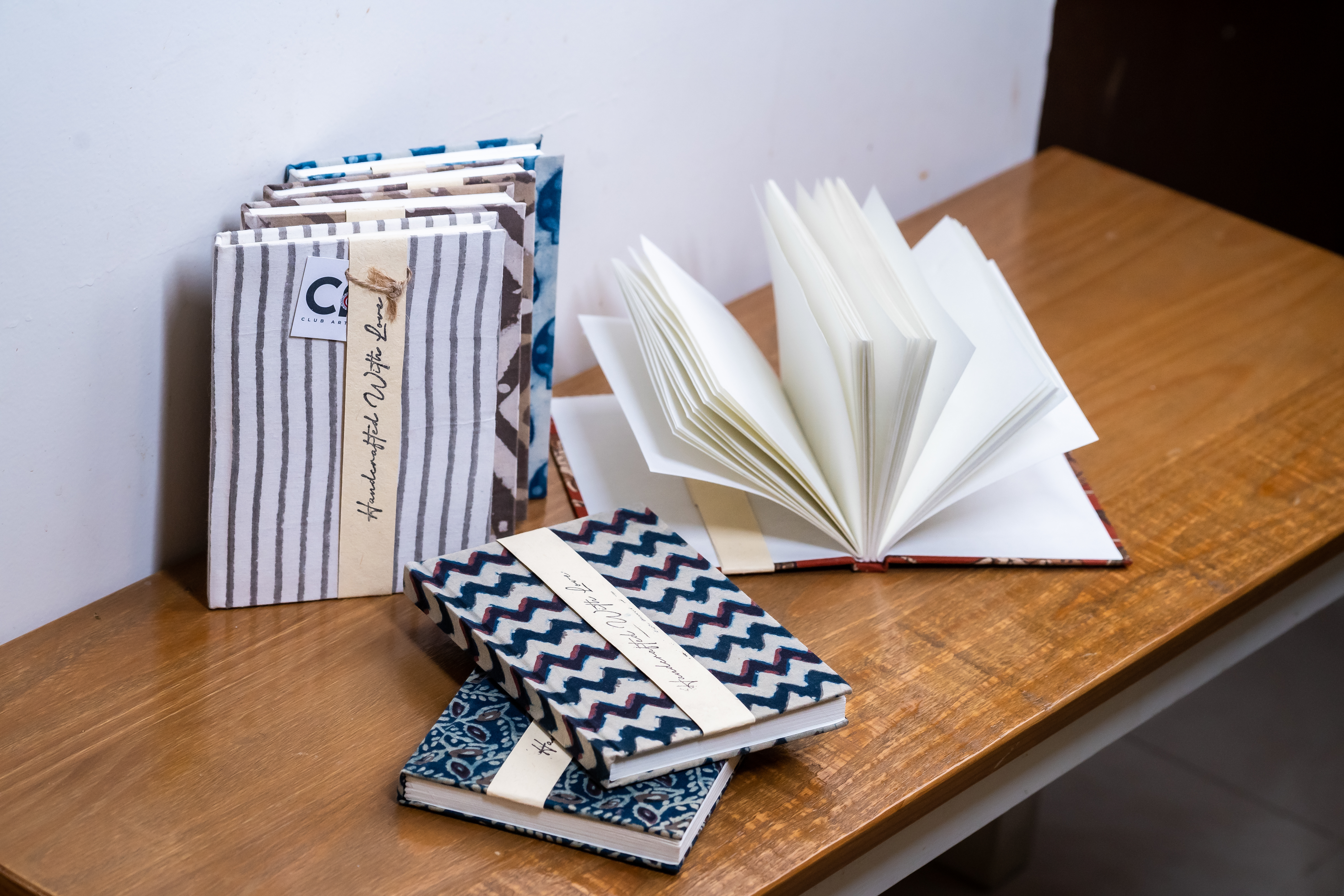
The organization’s product line is limited, yet elegant. It includes table linen, stoles, laptop sleeves, etc., and smaller products such as bookmarks, patchwork pouches, and hand block printed diaries.
Leera’s dyeing artisans work completely by hand, manually tying the fabric, dyeing it, and opening the threads as well. “This process is not just tedious, it also means that sometimes, when opening the knots, the fabric tears,” says Kairavi.
This was taken as a challenge and the team came up with a line of products that utilized those and other scraps of fabric. The Leera bookmarks, patchwork pouches, and Club Artizen cord organizers are all part of that product line.
The tiniest of scrap is utilized by the enterprise, making sure that nothing goes to waste.
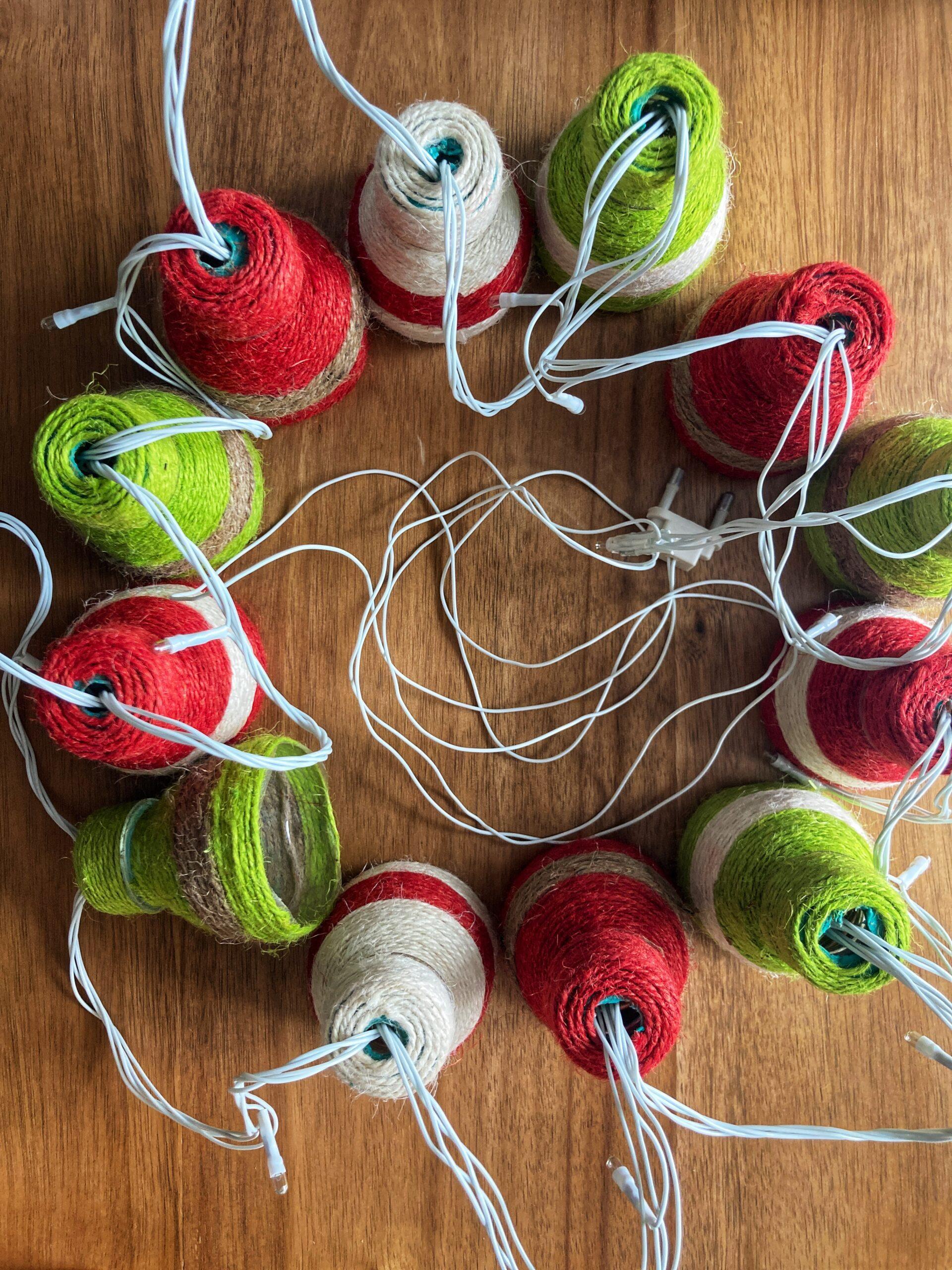
The first product that we came across, from Seva Charitable Trust, was the gobar diya. These diyas, made from cowdung, burn out completely, and leave behind an ash residue that can be used as plant manure.
What a wonderful idea, we thought, to celebrate and move toward sustainable living, and what a lesson to human beings: to be of use, and return to the earth from where we come.
Since then, we have come to know more about Seva and their mission of saving wildlife, tigers, and Mother Earth, and the artisans they support.
Hamisha Parekh, trustee and co-founder of Seva, talks about their journey since 2015, when they started a project to recycle plastic bottles for communities living in the Sanjay Gandhi National Park area in Mumbai. SGNP, on the outskirts of Mumbai, is home to 150 species of birds and 150 species of snakes, and also houses a few leopards.
“Our idea was always driven by a need to preserve nature, and providing livelihoods helps communities who depend on the forests to live a more sustainable life, while nurturing the forests,” she says. “The idea was that they have a livelihood that does not even deplete the forest of one leaf.”
Since then, their initiatives have expanded to include several projects and partnerships, and they are on the cusp of expansion. As a wildlife trust, they are restricted by the areas they can work in, but Hamisha says that is a good thing.
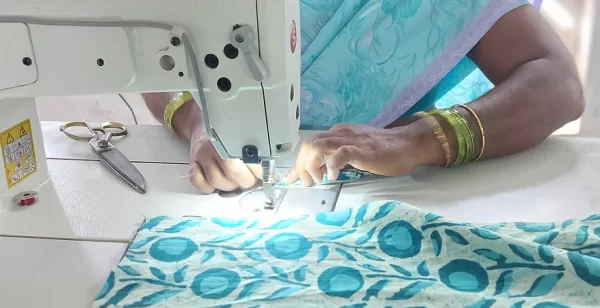
After the plastic bottle recycling project, the Seva team started working with the women of the communities surrounding the park to provide other livelihood opportunities. In 2018, they started their tailoring unit in partnership with the College of Social Work, Nirmala Niketan.
When COVID hit, after a few months, mask making took on a huge effort, and Seva sold over 2,00,000 masks, marking a turning point for the artisans.
The women were not just happy that they were able to make money, but also that their work likely saved lives. Heena Dipak Parmar, supervisor at Seva, says that women from the community have increased their confidence from coming to Seva, and not only because of the income.
“it’s more than the money; it’s that they have learnt a new skill. If they work as house help, their income may be the same, but they have no way to move forward from there. Here, they are challenged, and they learn creatively, and how to solve problems.”
For instance, when an urgent order for school bags came about, the ladies figured out the optimal way to make the bags quickly: a few of them stitched the pockets and a few others, the handles, so that the bag could be assembled quicker. Often, the material and motifs are inspired by the traditional arts and crafts of India.
In parallel, Seva’s other projects on health and nutrition continues in the communities. As part of that close connection with the community, two other projects have come about, that serviced the need for the outside world to know more about theirs: the nature walk and the tribal kitchen. The nature walk is a trek along the forest, followed by a sumptuous meal at the tribal kitchen, featuring the local menu.
Plans are on to expand their programs to other states, including Karnataka and Tamil Nadu.
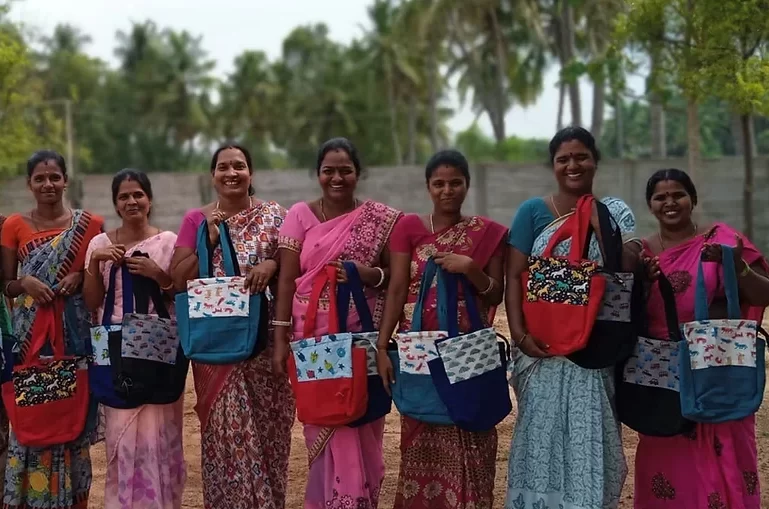
Sura—meaning shark—has helped women in a rural coastal area in Cuddalore, Tamil Nadu, fasten their children’s futures, much like they do their bags.
Sura was born in 2017, when a group of mothers saw that they could barely afford their children’s education, and wanted a way out. They decided they could create products and sell them, and use that money to fund their children’s education. Sura is part of Project Kanavu, which runs educational projects in the same area.
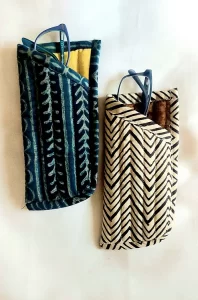
What started as one product—a simple tote bag—has now slowly expanded to over 50 products and counting. The group works with sustainable materials and traditional handicraft prints including kalamkari and ikkat, in their products.
The pandemic, whether for individuals or organizations, was a test of inner strength. It was during this time that Sura sprung to action and created new products, including masks.
Ila, one of the Sura women, would say about the masks, “We were earlier making bags, which was a nice-to-have product. What we make now is essential– it is helping someone be safe and that is a special feeling.”
Now, back on track after the lockdown, Sura has managed to bring in more vibrancy in their work through constant engagement as circle time, discussions, problem-solving, and creativity all come together, like entrepreneurs running the centre.
Nisha Subramanian, co-founder of Sura and a Teach for India alum, says she mostly ran on the women’s confidence, and her personal challenge was to figure out how to make the market linkages work. She credits a lot of it to the partners Sura has worked with over the years. “Sura is who we are today because of immensely strong relationships,” she says.
Sura constantly looks to improve not just its processes and designs, but also the lives of the women of the community, all with a practical lens. When irregular attendance could not improve in spite of incentives, the group sat together and figured that the best way forward would be to listen, not assume, and Sura introduced the four-day week for the women.
Their enthusiasm for their work is apparent to anyone who comes in contact with any of the women, or even their digital avatar.
Club Artizen is proud to bring you several products from Sura.
(All images by Sura)
Products by Sura
Artists were cameramen of those days, says Sachin Kothari, of Fine Arts School, Udaipur, of Mewar Art. “They accompanied the king wherever he went, and would instantly paint scenes from these outings.”
Mewar art, a popular miniature art form from the 16th and 17th centuries, characterized by bright colours and mostly religious forms in the earlier years, included snippets of royal life from around the 18th century.
Sachin Kothari at work
It is this art form that Kothari, 62, is working hard to preserve. He works with youth from tribal and rural regions around Udaipur, and helps them get a footing in this traditional art. It is not an easy task to get trained, he says. His program runs for five years, and students are given a stipend during this time.
So far, he has trained over 50 students, and unfortunately, only 10 or so are still practicing the art. “That’s better than nothing,” says Kothari.
One of them is Mohanlal Negwal, 45, who came to the school as a student nearly 12 years ago. Now, he works with Kothari, and creates the miniature paintings the school is famous for. Other artists like Surender are also part of Kothari’s artist group.
Mohan, a farmer, visited Udaipur often, and during one of these visits, walked into the school. He was then looking for some additional income, and joined the course. After three years, he started working on projects with Kothari, and now, he says he would not do anything else.
“It chooses you, art. Just like the halwai puts in ghee, sugar, and badam, and takes his time to make the sweet, art takes time, but the end result is amazing.”
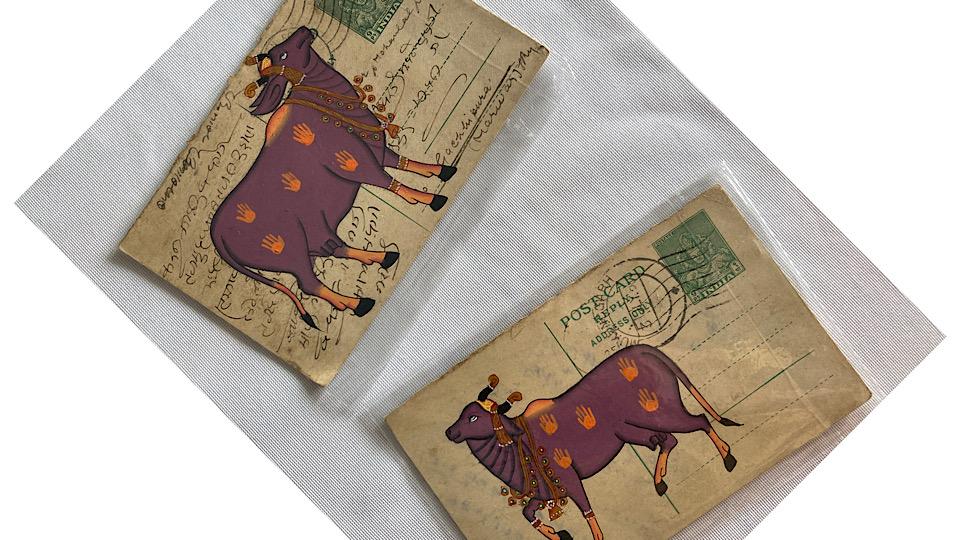
Sample Mewar art on antique postcards
As people move toward modern themes and newer pastures, Kothari sticks to traditional themes, only changing the medium. Earlier the paintings were done on ivory and on paper, and many of Kothari’s work are on silk.
One of the most eclectic pieces of work his school has brought out is the Mewari and Pichwai artwork made on vintage postcards.
“The paper is very good to work on—it is acid-free,” says Kothari. Only on asking him more does he tell us the process: his team collects postcards and old accounts books from older parts of Udaipur—the palace and the wholesale market, where these things are regularly disposed of. The medium is prepped and the work then begins.
Exquisite detailing
Sample miniature art in progress
It is not as easy as just dipping the brush in the paint. The brushes are handmade—from squirrel hair—and the pigments too—from different coloured agates.
The process of painting can take a few days, depending on the skill of the artist.
Mohan weighs in on why there aren’t many takers for this art. “Patience. That is what is missing today. People want to take the lift to the 10th floor, not take the stairs, which is what art is,” he says.
It’s not just the artists, though. Kothari rues the fact that miniature painting does not get its due in India: “People ask why the price is high for such a small piece!” A lot of his clientele are from other countries, but he wishes more people in India appreciated their own history.
“It will take a lot of education to get people to appreciate traditional arts,” he says.
But try he will. With the help of artists like Mohan and Surender, it just may be possible.

 While women like Uma were from the region, and knew about the traditional Chennapatna toys, they did not know how to make them. Now, with Artisan’s Pride, they are deeply embedded in the ecosystem of the Chennapatna toys.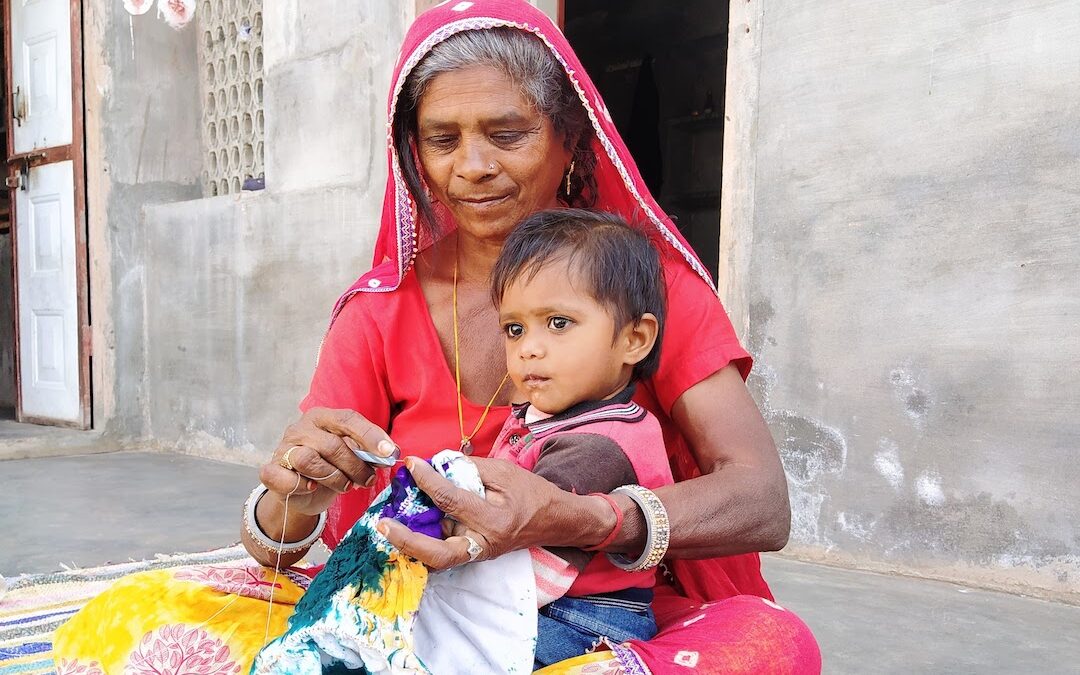
 Leera (Livelihood Empowerment and Encouragement of Rural Artisans), a social enterprise founded by Kairavi during COVID, transforms fabrics that are created using tradition hand-made techniques—Bandhni, Shibori, Sanganeri, and embroidery—into contemporary products. Incidentally, “leera” also means “scraps of fabric” in Marwari, a concept close to what the organization seeks to do.
 With two units each in rural Sujangarh and in Bichoon, Leera has 25 artisans on their payroll and over 400 of them work from their home, as of 2023.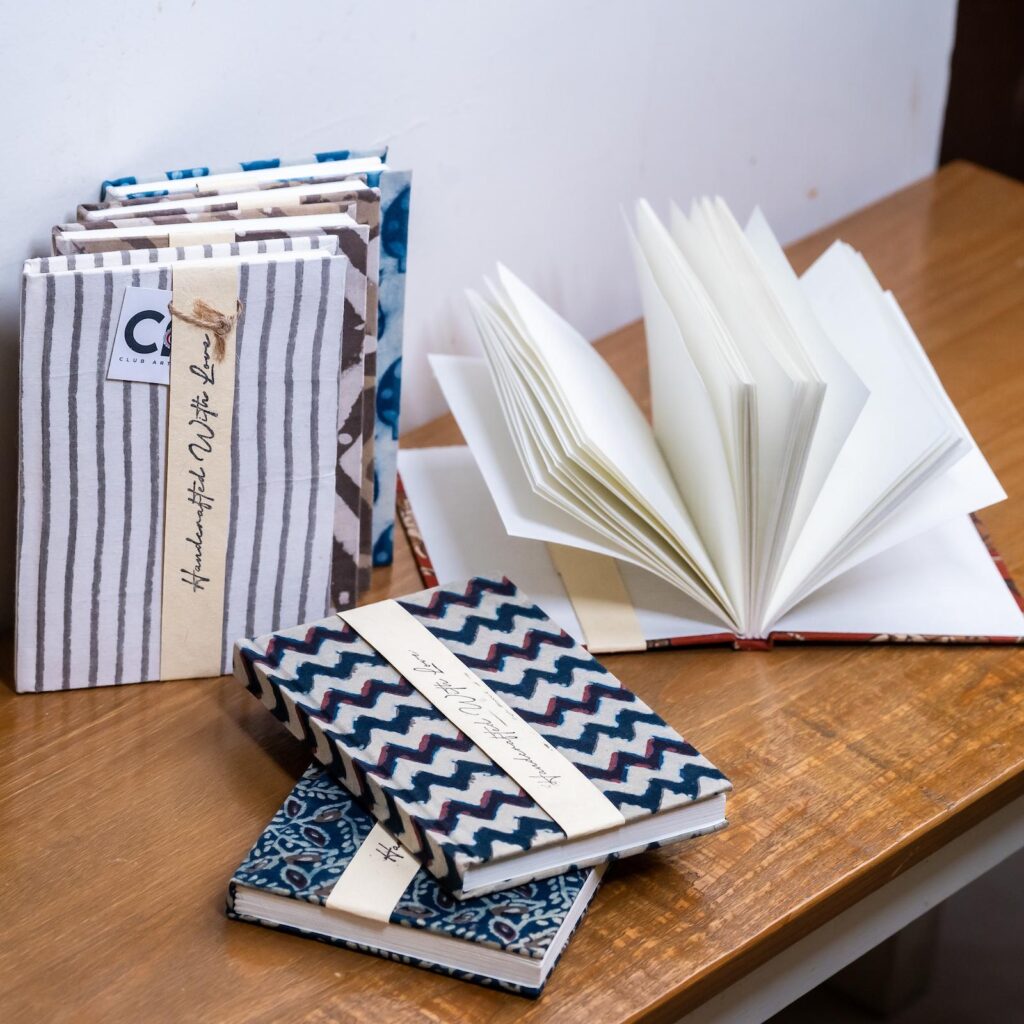
 What a wonderful idea, we thought, to celebrate and move toward sustainable living, and what a lesson to human beings: to be of use, and return to the earth from where we come.
 Sura was born in 2017, when a group of mothers saw that they could barely afford their children’s education, and wanted a way out. They decided they could create products and sell them, and use that money to fund their children’s education. Sura is part of Project Kanavu, which runs educational projects in the same area.