When Kairavi Shahu started work on the exclusive vegan leather line for Club Artizen, the task seemed simple: use natural products, and create lifestyle products that appeal to all. After all, she had been working for the revival of traditional dyeing techniques like Shibori and had created a home décor line, among other products.
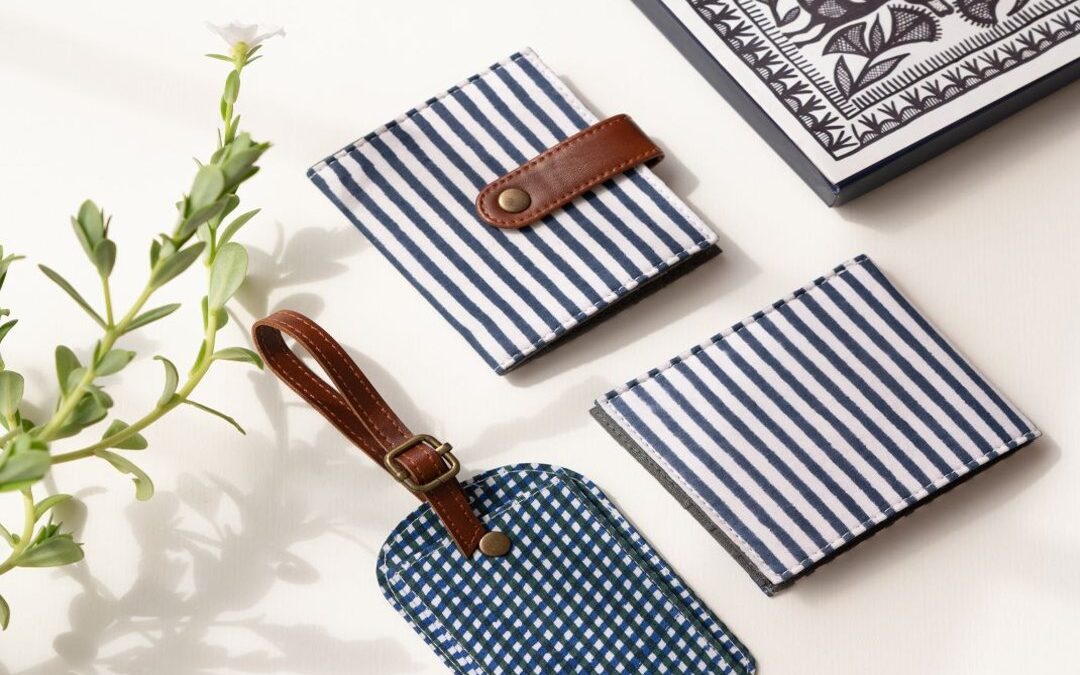
Kairavi and Anita Hariharan, co-founder of Club Artizen, started work on the wallet, they noted the specifications that were to characterize the products.
✔Must be as eco-friendly as possible.
✔Must work for men and women.
✔Must be durable (for everyday use).
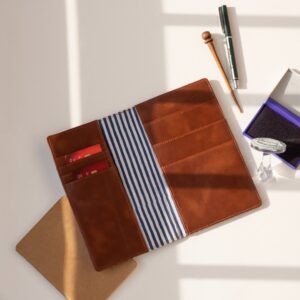
The team zoned in on a few products: wallet, passport holder, business card holder, and a luggage tag.
What seemed like an easy task was actually quite challenging, as the journey of sustainability often is. The biggest challenge? Achieving an aesthetic and durable product from handmade fabric.
Handmade, hand-dyed fabric is usually delicate and soft and to give the fabric the required stiffness and durability was a challenge. This was especially true of the passport holder and wallet, which had several layers: the outer hand block-printed fabric, the inner leather, the lining, and the interlining.
The other challenge was coming up with an aesthetic that would work for all.
‘It was interesting to note how different men and women see products. Based on market feedback, we went back to the drawing board and made some changes,’ says Anita.
After a few tries, the team emerged with a winner!
For the passport holder, for instance, the inner layer is made from vegan leather, and the interlining from natural rubber. The outer layer is made using hand block-printed fabric, and the product comes in two neutral shades.
The products are made in stages by women artisans: the block-printed fabric is sourced from the units in Rajasthan, and is cut by women artisans who work from home. The cut components are then taken to the stitching unit in Jaipur, where other women artisans stitch and finish the product, ready for shipping.
‘The great thing with the vegan line is that it’s a pleasure to use, and is also easy to maintain and wash,’ Kairavi says.
The Club Artizen Vegan Line is now available in its own Sohrai gift box, encapsulating the power of collaboration, eco-consciousness, and the enduring legacy of Indian art.
Jaipur prints, for many of us, bring to mind one type of print, perhaps the ones we see in bedsheets.
However, when you talk to Kairavi Shahu, founder of Leera, you realize the mind boggling variety of printing, dyeing, and stitching techniques practiced in just one part of Rajasthan! The richness of Indian textile art hits you once again.
Leera (Livelihood Empowerment and Encouragement of Rural Artisans), a social enterprise founded by Kairavi during COVID, transforms fabrics that are created using tradition hand-made techniques—Bandhni, Shibori, Sanganeri, and embroidery—into contemporary products. Incidentally, “leera” also means “scraps of fabric” in Marwari, a concept close to what the organization seeks to do.
A graduate of textile design from the National Institute of Fashion Technology, Chennai, Kairavi visited Sujangarh for her graduation project, and simply stayed back.
She works with rural women, and is trying to revive the craft of dyeing by hand and hand block printing, among other traditions.
One of these women is Rubina Sultana, who joined Leera in 2021. A graduate of biology, Rubina married into the village of Bichoon near Jaipur, and was looking for opportunities to work, when someone told her about Leera. She came in and worked hard, and is now one of the artisans who works on new product designs with Leera.
“When I came in, I didn’t know much. Slowly, I learnt many techniques including patchwork,” she says. She earns around Rs. 25,000 some months, and has graduated to training other artisans as well.
Kairavi says this is what the organization seeks to do—to create artisans who can take leadership roles. Some women are unable to step out of their homes, and they are able to work at home on a per-piece rate as well.
With two units each in rural Sujangarh and in Bichoon, Leera has 25 artisans on their payroll and over 400 of them work from their home, as of 2023.
Their specialty? Products made using the Shibori technique. According to accounts, the Japanese Shibori technique of resist dyeing was brought to India by Rabindranath Tagore. It has found a lot of traction within Indian dyeing techniques, as it allows for a more versatile pattern than the Bandhni technique.
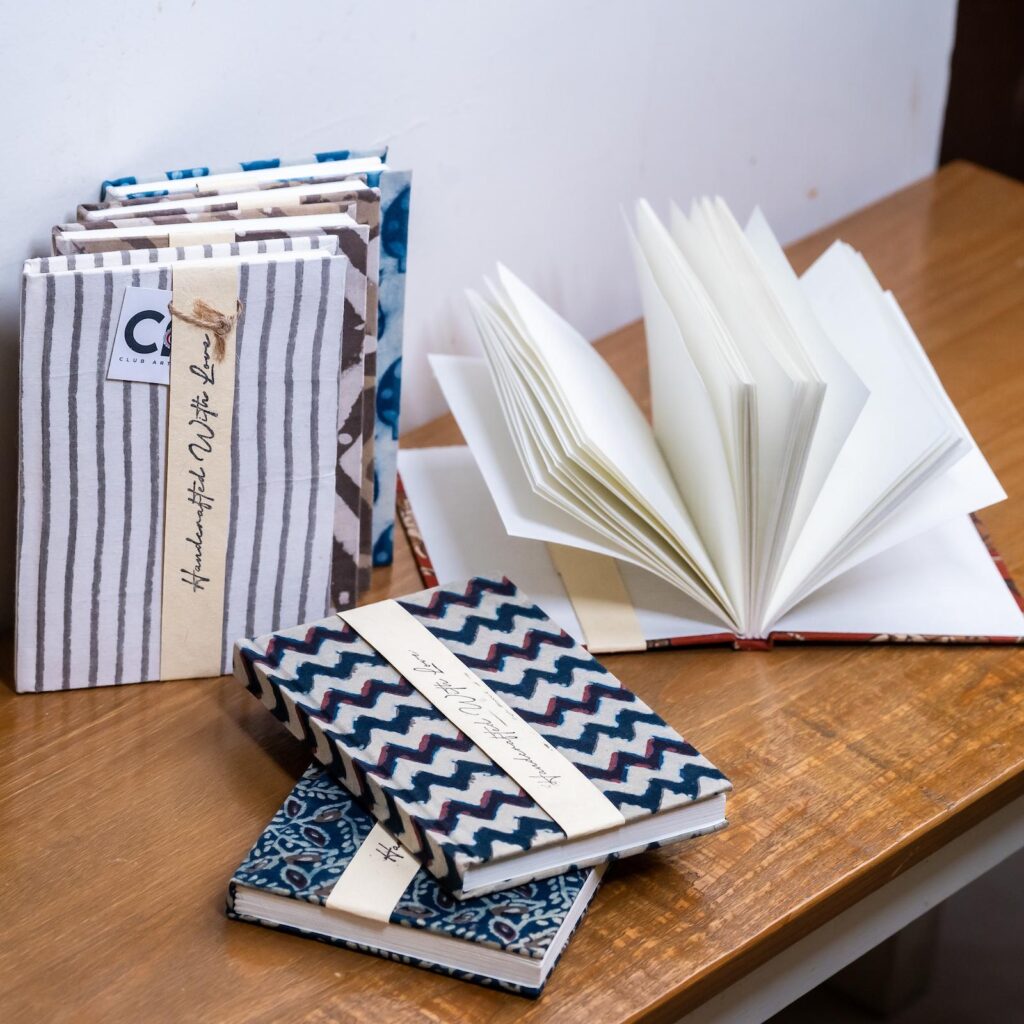
The organization’s product line is limited, yet elegant. It includes table linen, stoles, laptop sleeves, etc., and smaller products such as bookmarks, patchwork pouches, and hand block printed diaries.
Leera’s dyeing artisans work completely by hand, manually tying the fabric, dyeing it, and opening the threads as well. “This process is not just tedious, it also means that sometimes, when opening the knots, the fabric tears,” says Kairavi.
This was taken as a challenge and the team came up with a line of products that utilized those and other scraps of fabric. The Leera bookmarks, patchwork pouches, and Club Artizen cord organizers are all part of that product line.
The tiniest of scrap is utilized by the enterprise, making sure that nothing goes to waste.

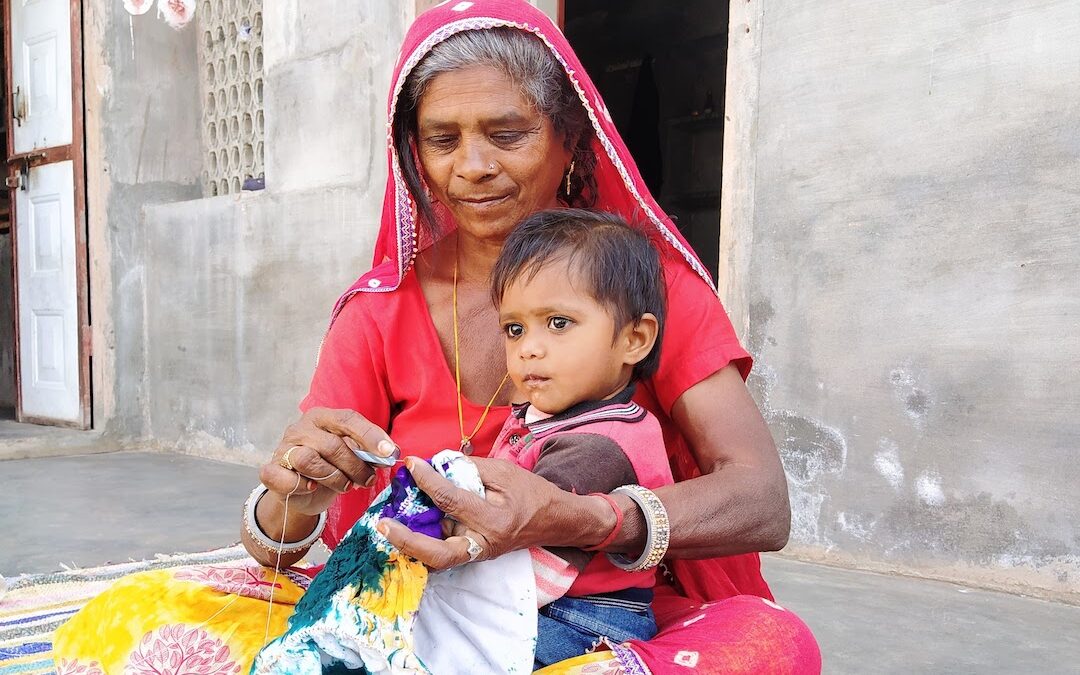
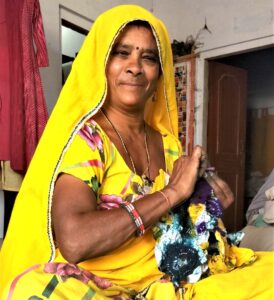 Leera (Livelihood Empowerment and Encouragement of Rural Artisans), a social enterprise founded by Kairavi during COVID, transforms fabrics that are created using tradition hand-made techniques—Bandhni, Shibori, Sanganeri, and embroidery—into contemporary products. Incidentally, “leera” also means “scraps of fabric” in Marwari, a concept close to what the organization seeks to do.
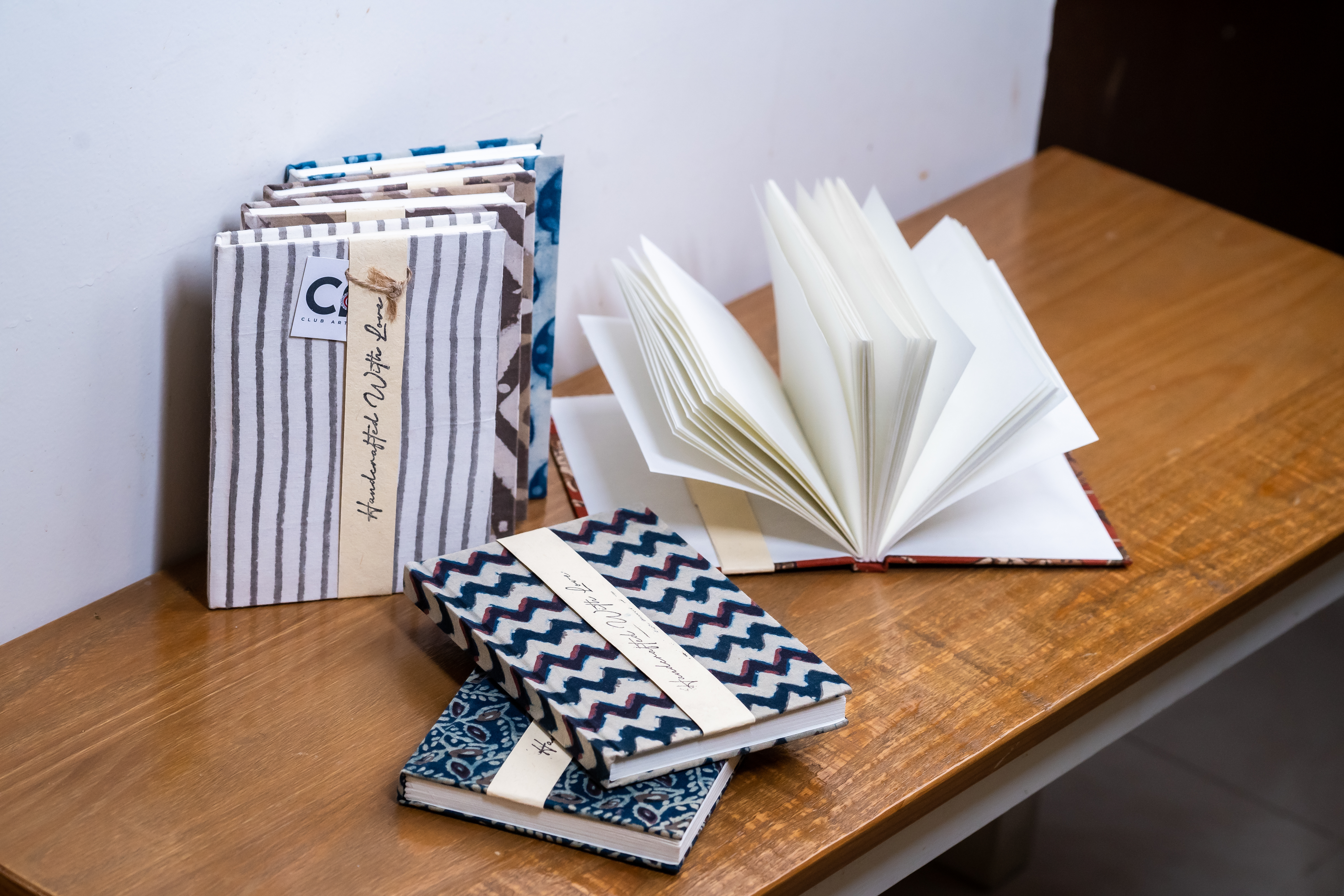 With two units each in rural Sujangarh and in Bichoon, Leera has 25 artisans on their payroll and over 400 of them work from their home, as of 2023.