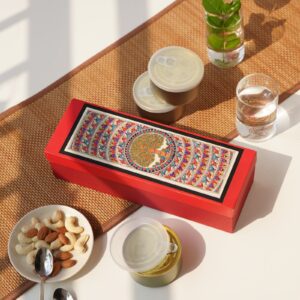

Madhubani, also called Mithila painting, originated in the Mithila region in present day Bihar. While its distinctive style and vibrant colours have garnered global attention, there are several lesser-known facts about Madhubani!
- Ancient Origins: Madhubani art can trace its roots back to ancient times. It is believed to have been practiced for over 2,500 years. The first documented reference to this art form can be found in the Ramayana. It is mentioned that King Janaka, the father of Sita, asked artists to decorate his kingdom with intricate paintings, laying the foundation for Madhubani art.
- Hidden Stories in Every Stroke: Madhubani art is not merely an aesthetic endeavour; it is a means of storytelling. Traditionally, women in the Mithila region used this art form to narrate myths, legends, and daily life through their paintings. Each element in a Madhubani painting, from the patterns to the colours, holds significance and tells a tale.
- Main Styles:
Within Madhubani art, several styles coexist.
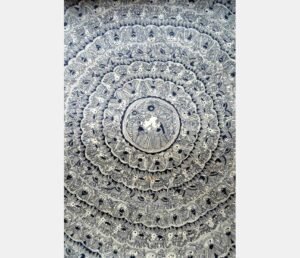
Khodna style of Madhubani
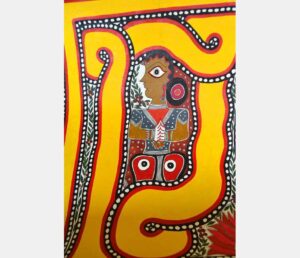
Bharni style of Madhubani
- Bharni focuses on filling forms with bold, flat colours.
- Kachni relies on fine linework, often monochromatic.
- Godhna draws from tattoo traditions.
- Tantrik explores spiritual and esoteric themes.
- Kohbar paintings, traditionally made for weddings, symbolise fertility and prosperity.
Each style reflects a different social and cultural context.
-
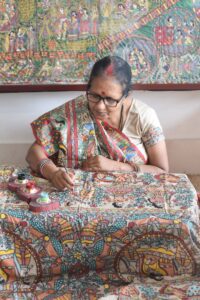
- Earthy Palette: Traditionally, Madhubani artists use natural pigments for their creations, even as this is fast changing. These pigments are sourced from locally available materials such as turmeric, indigo, pomegranate, and charcoal. The limited colour palette gives Madhubani art its distinct earthy and rustic charm.

Madhubani artist Asha Jha
- Earthy Palette: Traditionally, Madhubani artists use natural pigments for their creations, even as this is fast changing. These pigments are sourced from locally available materials such as turmeric, indigo, pomegranate, and charcoal. The limited colour palette gives Madhubani art its distinct earthy and rustic charm.
- Ritualistic Art: Madhubani art plays an integral role in various rituals and ceremonies in the Mithila region. It is often used to decorate homes during festivals, weddings, and other significant events. The paintings are believed to bring good luck and ward off evil spirits.
- Female Participation: While there are male Madhubani artists, the art form is primarily dominated by women. Historically, women in Mithila would pass down this traditional art from one generation to the next. This matriarchal tradition has been crucial in preserving the art form’s authenticity.
- Eco-Friendly Canvas: Traditional Madhubani paintings are created on handwoven cloth or paper made from rice straw. This eco-friendly approach not only adds to the art form’s uniqueness but also aligns with the principles of sustainability.
- UNESCO Recognition: In 2016, Madhubani art was recognized as an “Intangible Cultural Heritage of Humanity” by UNESCO. This prestigious recognition has helped raise awareness about this traditional art form and its importance in preserving cultural heritage.
Our Madhubani Products