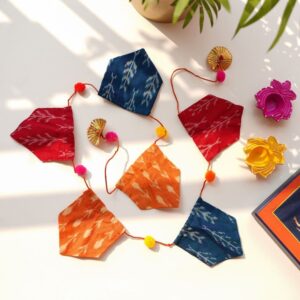
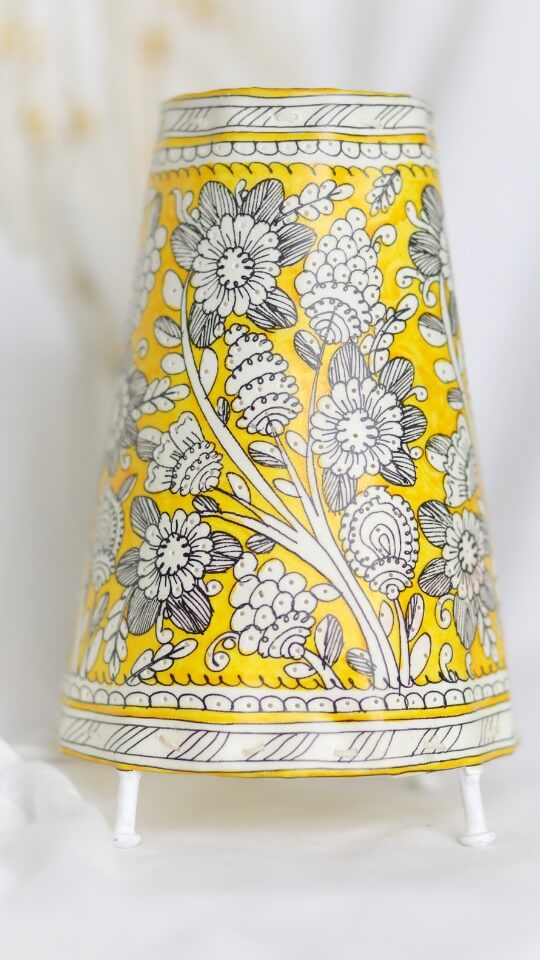
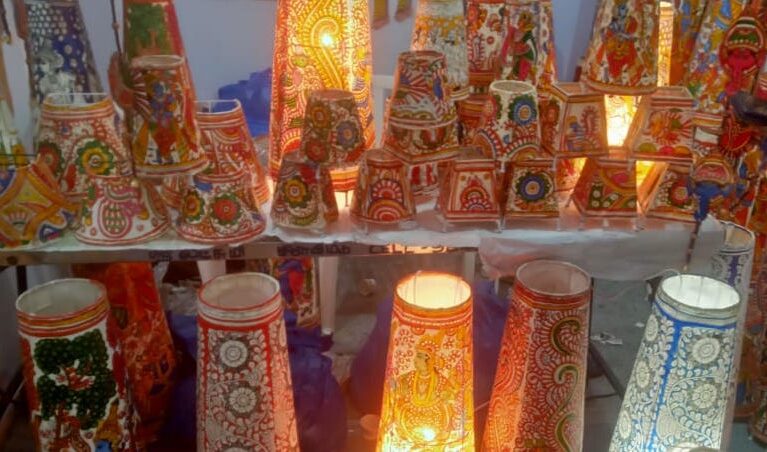
Using this basic idea, this ancient art form of Andhra Pradesh has beautifully adapted to contemporary lifestyles. The artisans of Andhra Tholu Bommalatta, literally [leather] skin puppetry, have reinvented themselves to create products such as lampshades, to continue their traditional craft, while exploring sustainable markets.
Among the newer products, the handmade perforated lampshade is a perfect product for the translucent leather, and harkens back to its original use: a play between light and shade.
A few years ago, the Government of Andhra Pradesh gave the leather puppeteers of Nimmalakonta Village in Anantapur District a training program they will never forget: creating new products with their traditional craft of making leather puppets for the Tholu Bommalatta art form.
That training program, which included making lampshades, thorans, and other products, gave the 60 artisan families in the village a new lease of life.
Among them was the family of Siddhi Hanumantha, 36, who can trace this craft back to six generations. “The puppet shows had dried up and we were really looking at stopping this art altogether, when we learnt new products,” says Hanumantha. His father, Siddhi Anjaneyulu and brother Siddhi Chandrasekar are also engaged in the craft, with several awards, both national and regional, being bestowed upon members of the family.
The Tholu Bommalatta, literally, dance of the leather puppets, likely originated in the Satavahana Dynasty. The British exiled them from there, suspecting them of performing anti-British puppet shows, and nearly 200 years ago, many of the families migrated further south, and many of them moved to Andhra Pradesh, Kerala, and Tamil Nadu.
After television and the inevitable decrease in the popularity of puppet shows, the craft and the art were separated, leading to newer imaginings of the craft in home décor.
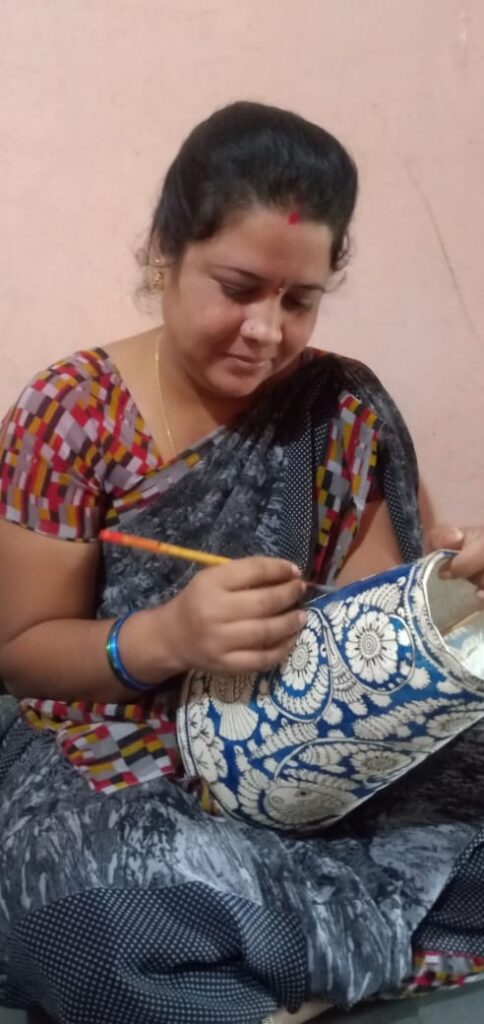
One of the clusters comprises a group of five artisans headed by Raghavendra Khande in Dharmavaram. Each lamp, he says, takes nearly 21 days to become ready, from curing the leather to the final finishing. The artisans cure and prepare the raw goat hide; create the metal frames; and draw, paint, and perforate the leather canvas.
Exhibitions are the major outlets for the product, which came to a complete standstill during COVID. While there has been increased interest in the craft, reliable income is the challenge, say the artisans.
While the products are relatively-fast moving, and Raghavendra’s three children help out whenever possible, they do not see it as a viable career option, says Raghavendra. A lack of a formal market for these makes this an unstable option, he adds.
“Hopefully, we can find a good market for our new products, so we need not move out of this craft,” he says.
How a craft dissolved differences in Goan craft clusters
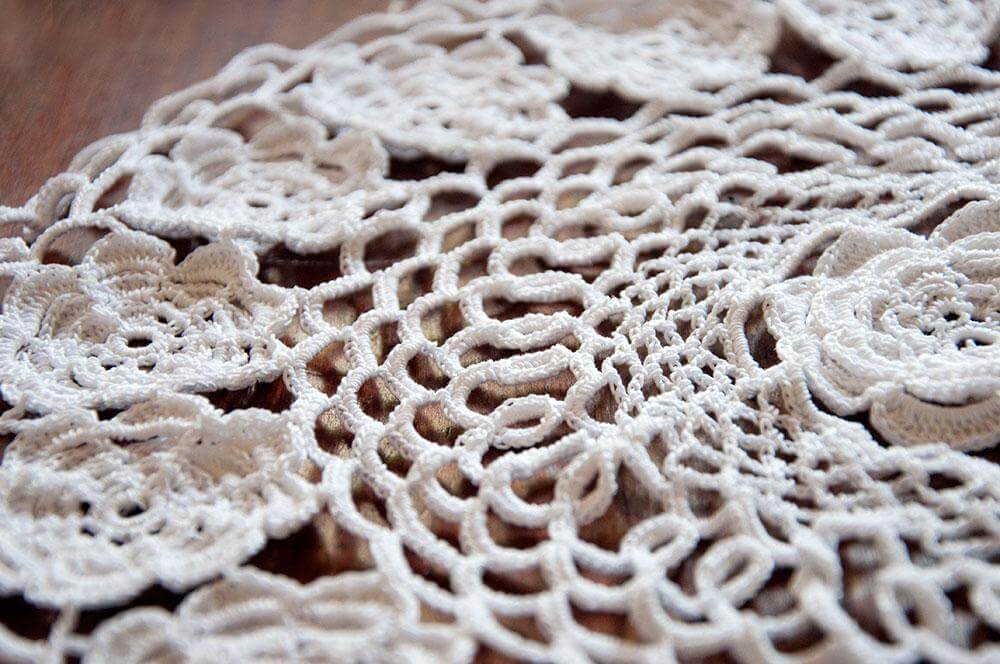
During my recent visit to Goa, I happened to visit a few handicraft clusters that were working on crochet. The designs and products were varied. From table mats to bags, from coasters to thorans, the women produced them all.
Many of the women reported having learnt crochet from their mothers and grandmothers. This was hardly surprising: Handicrafts, especially fine needle and thread crafts are often passed on from mother to daughter.
What was surprising is that what started off in one community has now spread to nearly all of Goa. Crochet first came to Goa through Portuguese missionaries and nuns as far back as in 1606, according to some reports. Women used crochet to create liturgical garments for the priests, a practice which continues even today.
Slowly, though, the craft made its way to other households in Goa, trickling down as a form of livelihood for women. Now, the women create not just new products, but also new stitches and patterns, based on their experiences. They had participated in a 15-day camp in Gujarat on the side-lines of a BRICS summit encouraging traditional crafts.
Of the seven women in the crafts cluster, there were women from different religions, age, and language. They were united by one thing: the craft of crochet.
As the women discussed creating a “crochet leaf” for a traditional Hindu baby shower, where the entire menu of the ceremony, replete with banana leaf, would be crocheted, I realized that crafts best developed unfettered, dissolving boundaries of class, religion, and gender.
Of late, my daughter and I are watching a baking show called, “Is It Cake?” where contestants bake cakes resembling real-life products: think handbags, basketballs, and even a bag of money!
Here’s Club Artizen’s version of the game, related to crafts:
Is it (originally) Indian?
We like to slap citizenship on crafts, as much as people. But do we even know where some of these crafts come from?
So, come on, take this quiz to find out!
Wicker baskets:
The quintessential storage medium, for everything from chic to chickens, where do you think this originated?
.
No, not India. There is evidence of wicker baskets from ancient Sumerian, Egyptian and Roman civilizations! Tribal communities from all over the world are known to have engaged in basket weaving using various materials per their geographic location: bamboo, palm, cane, willow, etc.
Jaipur Blue Pottery:
The eye-catching blue pottery, now available in many colours, unique as the only pottery form that does not use clay. Originally Indian, or not?
No, not Indian. The art came to India from the Mughals—more specifically, from Persia and Afghanistan. However, India is where it has flourished, and received global acclaim!
Gond:
This art form, characterised by bright colours and themes inspired by nature, has received a lot of attention in recent times. Indian, or not?
Yes, very much so. The Gond paintings, originally the preserve of Gondi tribes of Madhya Pradesh, also became popular among the tribes in Andhra Pradesh and Maharashtra.
Kalamkari:
The “pen-work” has swept the country, with the patterns finding favour even in the remotest corners of India. Is it Indian?
Yes, and no. In its current form, it’s entirely Indian. Its origin could be the pattachitra from Orissa. When the Golconda rulers and Mughals patronized the art form, it is likely that it was named “qalam-kari” with the introduction of Persian art motifs to the craft. Even if the name suggests penmanship, one form of Kalamkari uses block printing to create designs on a variety of fabric.
Who has not wanted to see the sky dotted with colourful diamond-shaped birds during Sankranti, and waited to utter the triumphant words, “Kai Po Che” (‘I have cut’)? So Indian, no?
Wrong. While the Sankranti tradition is all Indian, kites likely came to India via China, and made its way to the rest of the world! In fact, you might remember that Benjamin Franklin discovered electricity through an experiment using a kite. Without this travel of crafts and culture, you might not be reading this article online!
So, there you have it. While some crafts are born here, others have immigrated. Regardless of their origin, they all need nurturing and support. Join our club!
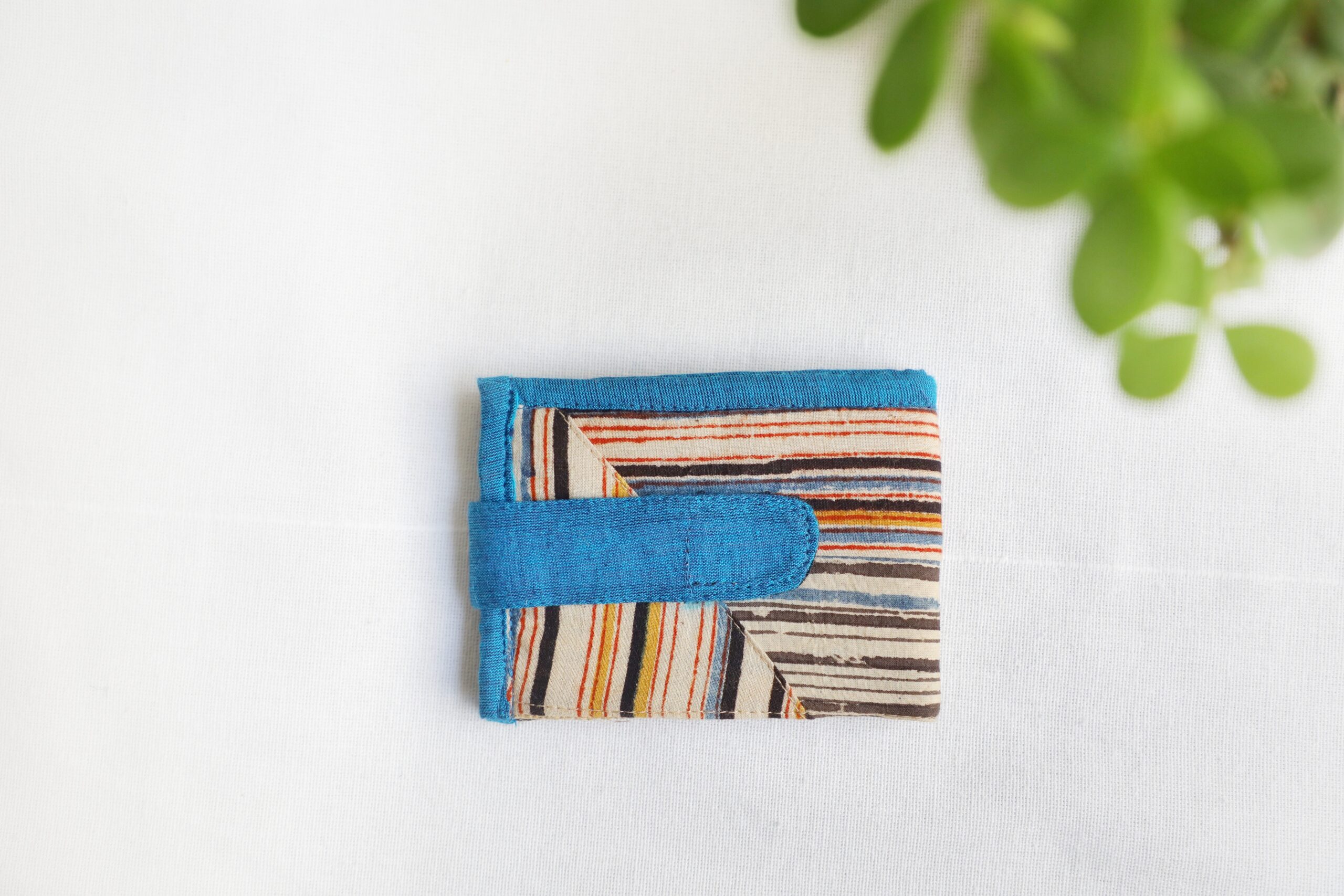
Enter the Kritikala store in Hyderabad, and if you are silent, you might hear each product — the Kalamkari skirt or the Mangalagiri laptop sleeve—echoing the laughter of the women who made them.
Speak to the women who made these handcrafted products, and you know it’s true.
Take, for instance, 34-year-old Shabnam, who works as a tailor at Kritikala for the past three years, supplementing her husband’s income.
“I look forward to coming here every day. It’s like a family—we laugh and play, and pull each other’s legs,” she says, peppering her entire conversation with laughs and giggles. It is tough to believe that before joining Kritikala, she had never gone anywhere by herself, forget bringing in income.
It is this spirit of independence and freedom that the initiative aims to deliver to its employees, says Himani Gupta, who founded Kriti Social Initiatives with friend Sreelata Chebrol.
When they started the organization in 2009 as an NGO to uplift the urban poor, one of their projects was a free tailoring course. Women received the training and used the skill for their personal use, but Himani and her friends soon realized the potential for a larger project that would gainfully employ the women. And Kritikala was born.
From a small, thatched shed with seven women, Kritikala has grown and now employs 60 women with the latest industrial sewing machines. What started off with scrap Kalamkari cloth given by the legendary Suraiya Bose of the House of Kalamkari Dhurries, has now expanded to local materials such as ikkat and mangalagiri as well.
While the four-month module on tailoring and stitching is, even today, mostly used for personal use, that still means saved income for the family, says Himani. Apart from the women who come to the unit, a few others also help in hand embroidery and other projects of Kritikala.
What sets Kritikala apart is its focus on innovation and contemporary designs, often a missing piece in traditional art clusters. With professional designers on board, Kritikala is able to make products as varied as garments and laptop sleeves to aprons and journal sleeves.
The path to a successful product is long. A prototype is made and approved, after which the women are trained on how to make it, end-to-end. Then, the product is QC’ed intensively, and approved for mass production.
With a combination of a fixed base income and incentives, the women are kept busy and efficient. And more importantly, happy.
Shabnam’s laughter is proof of that. “I didn’t even know how to cross the road, and now it’s like Kritkala has taught me how to cross the road of life!” she laughs.


 .
. 


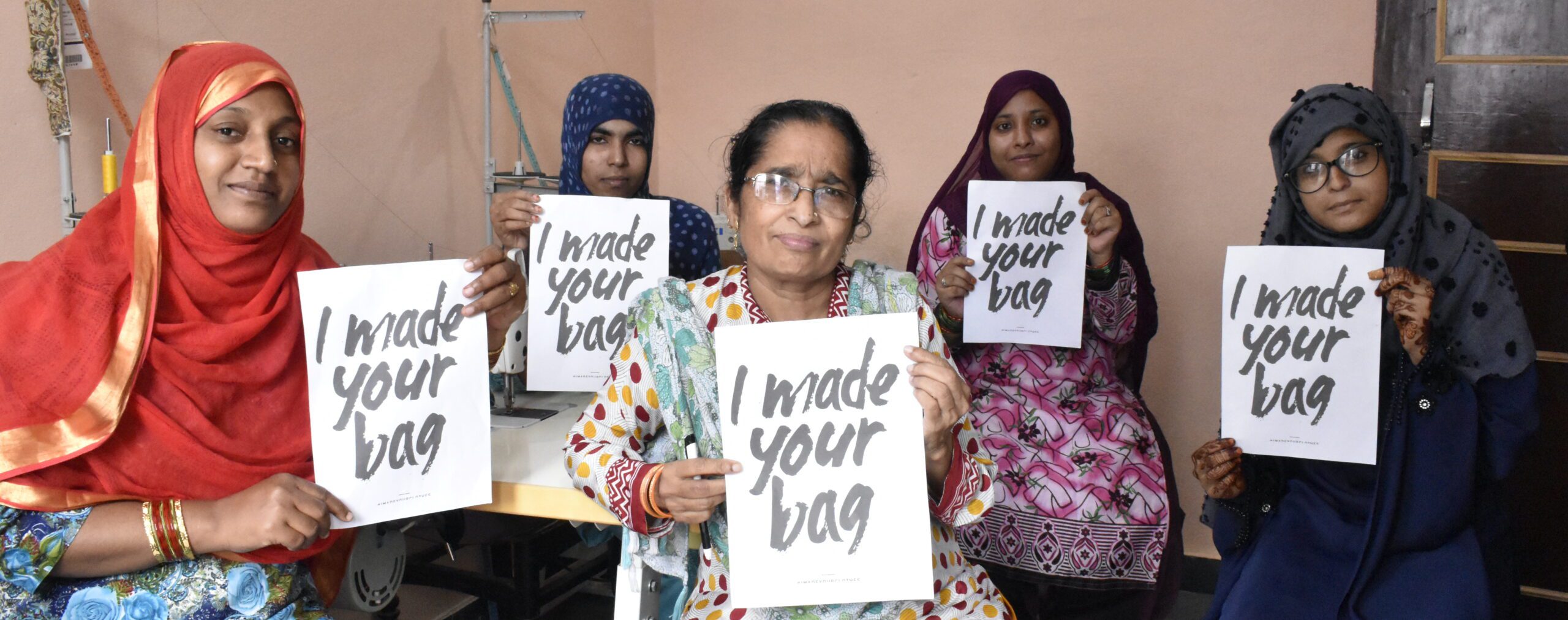

 When they started the organization in 2009 as an NGO to uplift the urban poor, one of their projects was a free tailoring course. Women received the training and used the skill for their personal use, but Himani and her friends soon realized the potential for a larger project that would gainfully employ the women. And Kritikala was born.
 While the four-month module on tailoring and stitching is, even today, mostly used for personal use, that still means saved income for the family, says Himani. Apart from the women who come to the unit, a few others also help in hand embroidery and other projects of Kritikala.