We’ve always had a tradition of using everything that can be used, and grass is no different.
India has an abundance of handcrafts that use grass as its base. It’s amazing to see that even within a particular kind of grass, different regions produce different kinds of craft.
Grass that is sturdy and thick is used for making various products, most commonly baskets. Naturally friendly to the earth, these products are known for their unique patterns and techniques. With increasing plastic penetration, grass crafts are in danger of dying out.
You can shop our products to beautify your space with these incredible grass craft items.
How many of these grass crafts do we know? Let’s check out!
Sikki Craft Grass
In North Bihar, Sikki grass grows in the damp, marshy terrain next to the rivers and ponds. It is grown in a region with a lot of rainfall. During the rainy season, locals typically gather this golden grass. They subsequently sell the dried grass by the foot at the Haat or neighborhood market.
The Sikki grass must first be cut from its root system and allowed to dry for a few days before it can be used. As the flowering area of the Sikki stem is not utilized for crafting, it is removed, and the leftover Sikki is then cut into pieces and cut using a knife or teeth.
Traditional Sikki crafts
Sabai Craft Grass
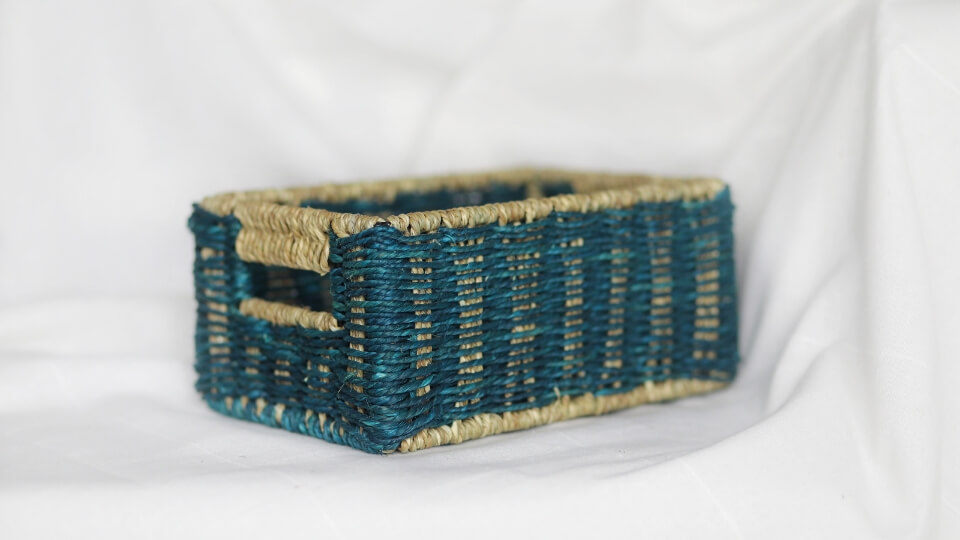
In Mayurbhanj, Odisha, and Midnapore, West Bengal, Sabai grass is widely grown. The Sabai grass is involved in a number of initiatives to increase grass production as well as the manufacturing of consumer goods such ropes, mattresses, rugs, couch sets, decorative items, and other high-end, stylish items.
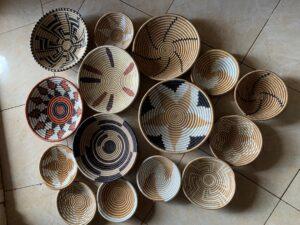
Sabai grass baskets
Sabai grass is first colored by boiling with dyes before being washed in water. After another rinse in clean water, it is sun dried. Sometimes, traveling across the countryside, one can see the Sabai grass spread on the road to dry. Then, the fine grass is sorted and twisted into plaits or ropes and used. Check out our Baskets and Bowls section for some of these products.
Kottan
One of the most popular crafts produced in Tamil Nadu State is palm leaf basketry. Even if it is strictly not a grass, the techniques and patterns are similar to that of grass.
New products with palm leaves
Extremely detailed patterns used to create palm leaf baskets have a unique allure. The products are primarily utilized in small-scale or everyday tasks and can be seen in people’s homes. It is interesting to note that the weaves and patterns used by different regions of Tamil Nadu vary widely.
Kauna Grass Craft
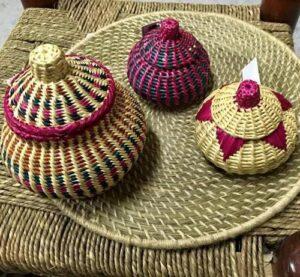
The Kauna Grass, native to the Northeast, has traditionally been used to make hats, mats and baskets. The grass, cultivated in the valley, was originally a weed, and is now cultivated commercially as well. With new techniques and designs, there are now multicoloured baskets with embellishments such as embroidery, bamboo handles and the like.
Apart from these, there are other crafts as well. Not only are grass crafts from this part of the world—they have been around for centuries in Africa as well.
African grass craft
The women of the nomadic Fulani tribes are known to be master weavers of grass, and create beautiful products out of local African grass.
Browse our store to try some of the grass craft that supports the livelihoods of (mostly) women weavers!
For a lot of people, love and affection is expressed through gifts. For me, it’s a way of establishing social connection especially around festivals and momentous occasions like birthdays, anniversaries, and important milestones in one’s life, like weddings or graduation! I love to look for and discover handmade or sustainable gifts that convey meaning and are beautiful to look at. Here are three things I look for in the gifts that I select and curate.
Functionality: I try and tailor this to the occasion and the audience. If it’s a corporate professional, things they use on a daily basis differs considerably than items that you can gift at a wedding. That’s the most logical thing. But items typically either have or don’t have giftable value. For example, I don’t like to gift paintings as they usually are so subjective, and the recipient may not want it up on their wall at all. On the other hand, a hand-painted item like a box, or photo frame or bookmark may serve the purpose of showcasing craftsmanship but also gifting something of functional use.
Functional art of India. Image by Eneida Nieves
Aesthetics & Livelihoods: There is no dearth of aesthetic value in traditional Indian crafts. Be it the Gond art of Madhya Pradesh or puppetry of Andhra Pradesh or Madhubani of Bihar. These are just a few more popular ones but once you start to understand how intertwined crafts are with Indian culture, it makes us wonder how we don’t talk or think about them more. In the past, I only found them during my travels or shopping at small town markets, but with more designers pouring in their ideas to adapt these to today’s times, gifts should become reflective of these crafts too. If only more people ordering gifts can be mindful of supporting India’s arts and crafts!
Varied arts of India
Sustainability: I want to make every purchase count. When I spending for gifts, it makes me feel better when I am spending to support someone’s livelihood or am contributing to the environment or, at the very least, I am not contributing towards harming it further. I started opting for plants, handcrafted items, and recycled/ upcycled gifts towards this. This is one area where I see the most potential for change at the workplace. Corporate India constantly gives out gifts for new hires, at events like All Hands Meets, for recognition or for expressing gratitude for people’s hard work. But it’s usually products from synthetic non-biodegradable materials ordered in bulk. It is my endeavour to change this and its one of the projects that Club Artizen is working towards. Even during the festive season, there is so much plastic packaging used in distributing sweets and other gifts to neighbours. Let’s opt for cloth or natural fibre packaging and discover/share more ideas this year!
Gifting is fun if you can discover new and contemporary lifestyle products such as those featured by Club Artizen. So this upcoming festive season, become a member, reach out to us and let’s get on this journey together!
These days, the word trousseau brings to mind elaborate lehengas and/or a celebrity getting married in a secret location.
While much of the idea of “carrying things from back home” may be lost in the modern urban context, there is always an element of “home” that men and women miss after they start a life together.
Handicrafts, and the making of them, served an important purpose: that of a community for women. While weaving a dhurrie, women chatted and complained and solved issues (and to be sure, gossiped). These were crafts that the women practiced, and many a time, it was a backup livelihood plan for the women.
Here are some crafts that were traditionally part of the bride’s trousseau, or what the bride’s family showcased at the wedding (never mind if the bride didn’t actually make them!)
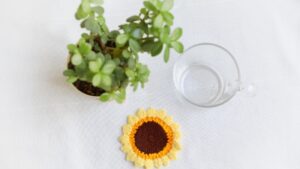
Goan crochet items were traditionally part of a bride’s dennem. While such practices are not prevalent anymore, typical crocheted items a woman took to her marital house included doilies, purses, and table runners, etc. A bride may also take a few gifts with her to gift her in-laws and friends in her new home. Check out our crochet coaster here.
Crochet coaster by Goan handicraft cluster
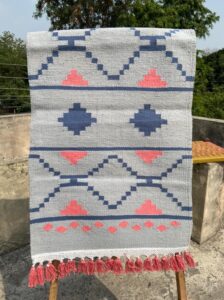
Punja dhurries, so named because of the claw (punja)-like tool used to beat the thread in place in the weave, was the staple of most Punjabi and Haryanvi households. Dhurries were traditionally woven by the women in their courtyard, and a woman traditionally wove her dhurrie, which doubles up as a floor mat, to her new home. Now, organizations like Sabtera have given the weave a new lease of life by repurposing smaller items from the dhurrie. Shop for our products here.
Punja Dhurries by Sabtera
Maharashtrian brides, in days gone by, would prepare items to display in the “rukhwat”, a tradition where varied articles would be displayed during the wedding. These could be crocheted work, embroidery, or paintings, etc. This has now given way to professionally arranged rukhwat.
The Chamba Rumal (handkerchief) from the Chamba region of Himachal Pradesh, is an intricate embroidery craft that was initially practiced by the royal ladies, and which made its way to the common man, was exchanged between the wedding parties and was part of many ceremonial offerings. The craft has come to disuse, and is in serious danger of dying out.
Traditional Chamba Rumal, Cleveland Museum of Art, CC0, via Wikimedia Commons
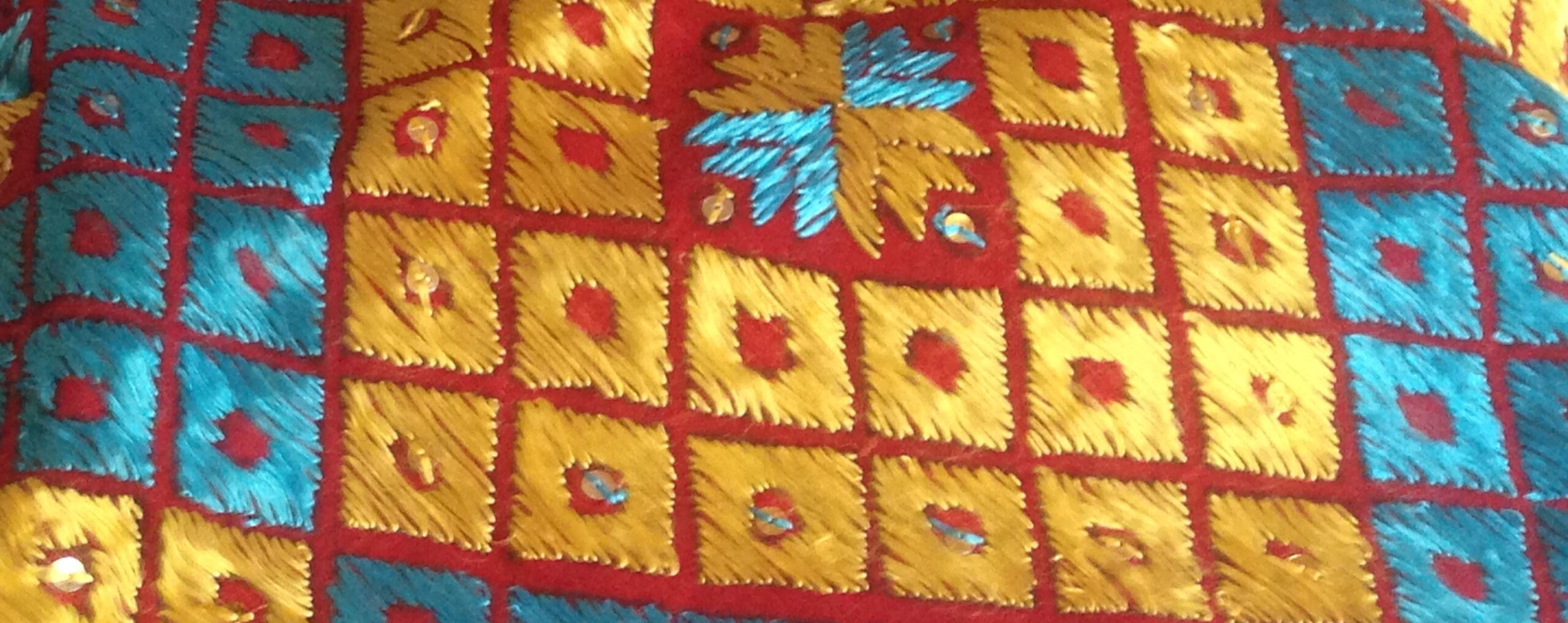
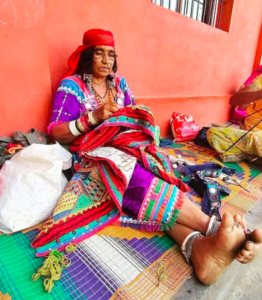
Lambani Embroidery: The Lambani craft, characterized by the use of varied bright cloth and a combination of patchwork, embroidery, mirror work, and shells are a treat to sore eyes, and is used for weddings. While the bridal dresses are elaborate and feature a variety of stitches, these days, bags made using Lambani embroidery are very popular.
Lambani artisan at work, picture courtesy Sandur Kushala Kala Kendra
With traditional crafts taking centre-stage, perhaps it is now time for men to show off their handicraft skills!
Do you remember any handcrafted item from a trousseau (yours or your mother’s)?
(Banner image: By Sheebamadanloewinger via Wikimedia Commons)
Gift giving is a central part of the festive season. It’s also a way to show that you care about someone and want them to have something special. Ever wondered how we have changed the way we gift, or what we gift?
Gifts change according to the times we live in, thankfully! Vincent Van Gogh (in)famously gifted his severed ear to a prostitute who admired his ears! In the 16th century, slaves were gifted among nobility. We’ve come a long way since then, and now, gadgets have taken their place at the top of people’s gifting options, a far cry from handmade edibles and crafts of yesteryear.
Self portrait with bandaged ear by Vincent Van Gogh
We’ve come a long way since then, and now, gadgets have taken their place at the top of people’s gifting options, a far cry from handmade edibles and crafts of yesteryear.
Here are some gifts that combine the practicality of modern living with traditional craft, for that perfect sustainable gift idea.
Kindle/iPad/Laptop sleeves: As books and address books have given way to devices, it’s important to keep them safe as well. Kindle, iPad and laptop sleeves are a great way to protect your precious device from scratches and bumps. They can be made from a variety of materials — even recycled plastic bottles! A touch of the traditional makes for a fantastic pairing of traditional and modern.
Cell phone holder: Anyone remember the crocheted telephone doilies for their rotary phones? The cell phone has come a long way with its multicolour covers, but one of the most useful modern products is the cell phone holder, which helps us keep it in one place, or simply just so we are not running around looking for it all the time, asking someone, “Can you please call my phone?”
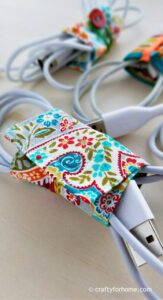
Cord organizers: This will take care of cord clutter that is the hallmark of nearly every modern home office! This can be a fun DIY project that you can create for your home office. Here is a tutorial. You can create fun organizers using scrap cotton.
Cord organizer from www.craftyforhome.com
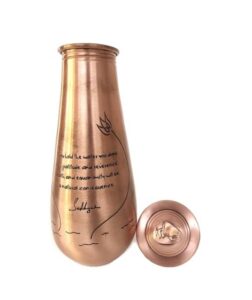
4. Reusable Water Bottle: The reusable water bottle is the perfect gift for people who love the environment, exercise and fresh water. There are many types of water bottles on the market today. You can find reusable ones, biodegradable bottles, and even ones with built-in filters. Copper water bottles are all the rage and you can support artisans by purchasing a bottle made by the Tambat Ali copper artisans of Pune from the Pune INTACH chapter’s Warsaa brand.
Of late, my daughter and I are watching a baking show called, “Is It Cake?” where contestants bake cakes resembling real-life products: think handbags, basketballs, and even a bag of money!
Here’s Club Artizen’s version of the game, related to crafts:
Is it (originally) Indian?
We like to slap citizenship on crafts, as much as people. But do we even know where some of these crafts come from?
So, come on, take this quiz to find out!
Wicker baskets:
The quintessential storage medium, for everything from chic to chickens, where do you think this originated?
.
No, not India. There is evidence of wicker baskets from ancient Sumerian, Egyptian and Roman civilizations! Tribal communities from all over the world are known to have engaged in basket weaving using various materials per their geographic location: bamboo, palm, cane, willow, etc.
Jaipur Blue Pottery:
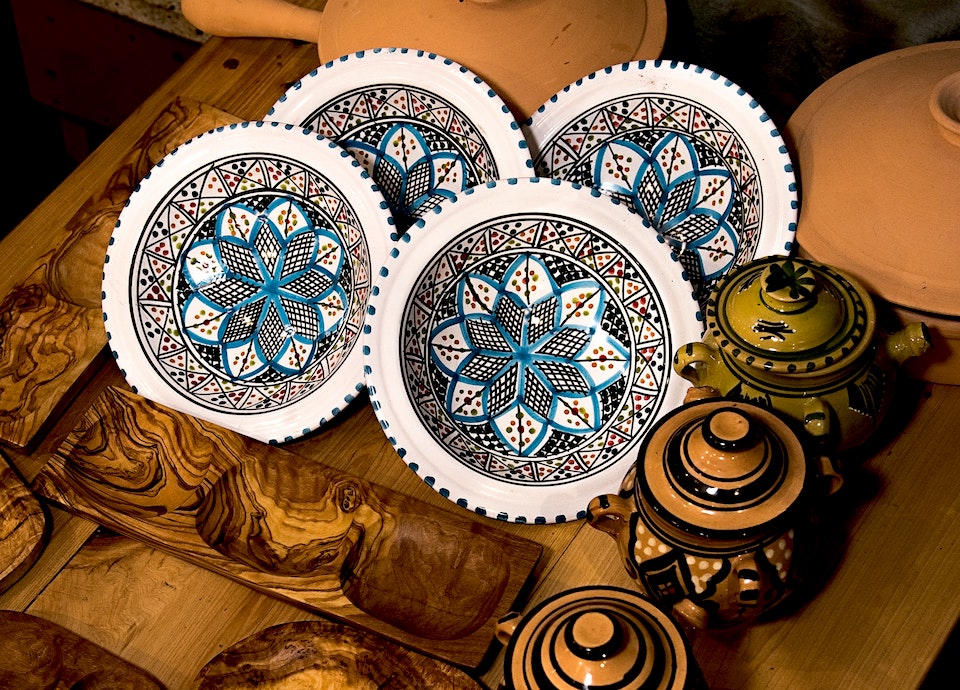
The eye-catching blue pottery, now available in many colours, unique as the only pottery form that does not use clay. Originally Indian, or not?
No, not Indian. The art came to India from the Mughals—more specifically, from Persia and Afghanistan. However, India is where it has flourished, and received global acclaim!
Gond:
This art form, characterised by bright colours and themes inspired by nature, has received a lot of attention in recent times. Indian, or not?
Yes, very much so. The Gond paintings, originally the preserve of Gondi tribes of Madhya Pradesh, also became popular among the tribes in Andhra Pradesh and Maharashtra.
Kalamkari:
The “pen-work” has swept the country, with the patterns finding favour even in the remotest corners of India. Is it Indian?
Yes, and no. In its current form, it’s entirely Indian. Its origin could be the pattachitra from Orissa. When the Golconda rulers and Mughals patronized the art form, it is likely that it was named “qalam-kari” with the introduction of Persian art motifs to the craft. Even if the name suggests penmanship, one form of Kalamkari uses block printing to create designs on a variety of fabric.
Who has not wanted to see the sky dotted with colourful diamond-shaped birds during Sankranti, and waited to utter the triumphant words, “Kai Po Che” (‘I have cut’)? So Indian, no?
Wrong. While the Sankranti tradition is all Indian, kites likely came to India via China, and made its way to the rest of the world! In fact, you might remember that Benjamin Franklin discovered electricity through an experiment using a kite. Without this travel of crafts and culture, you might not be reading this article online!
So, there you have it. While some crafts are born here, others have immigrated. Regardless of their origin, they all need nurturing and support. Join our club!





 .
. 


