It was the 1990s, and Dharamshala’s waste problem was increasing day by day. Tourists and increasing number of refugees, and a lack of a proper green waste disposal system meant that waste was not properly disposed of.
One day in 1994, a missive came to the Tibetan Settlement Office (TSO) in Dharamshala, from none other than HH The Dalai Lama: They were to solve the burgeoning waste problem.
In June 1994, the Clean Upper Dharamshala Programme (CUDP) was formed.
Green Warriors go door-to-door and collect waste and deposit it at the Waste Segregation Centre, where the waste is divided into recyclable and non-recyclable waste.
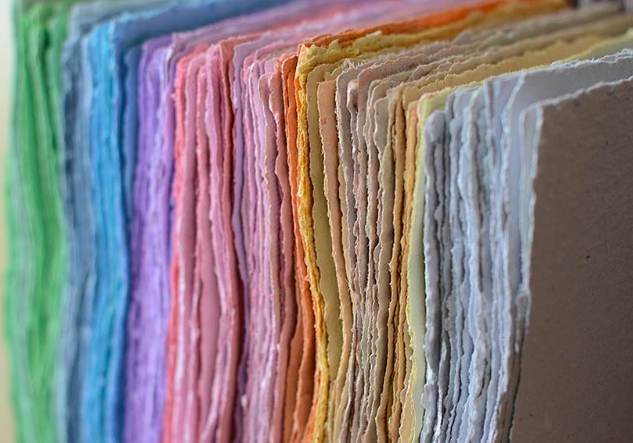
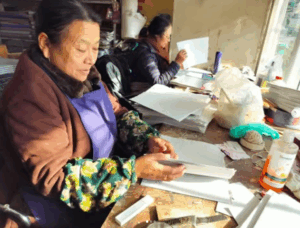
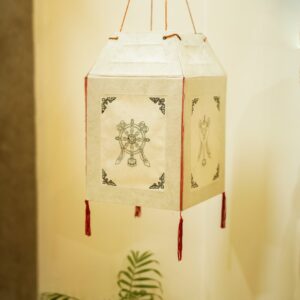
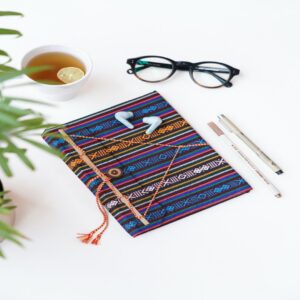
The Paper Recycle Factory collects the paper waste and creates beautiful handmade paper products out of it. The recyclable waste is then sold to agencies who undertake appropriate recycling measures.
The Green Shop sells the products created.
Visitors can also undertake a workshop on making handmade paper at the factory. The products made at the Paper Recycle Factory are sold at the Green Shop, with all proceeds going to the maintenance of the region. One enterprise, three benefits.
Club Artizen works with the enterprise and brings their most popular products to a wider audience.
Our Tibetan Paper Products
Etikoppaka is a small village about 1 km square on the banks of the river Varaha. It’s what the name translates to: a group of homes on the river’s edge. Its name conceals what it’s known for: it is where one of India’s finest wood crafts is made.
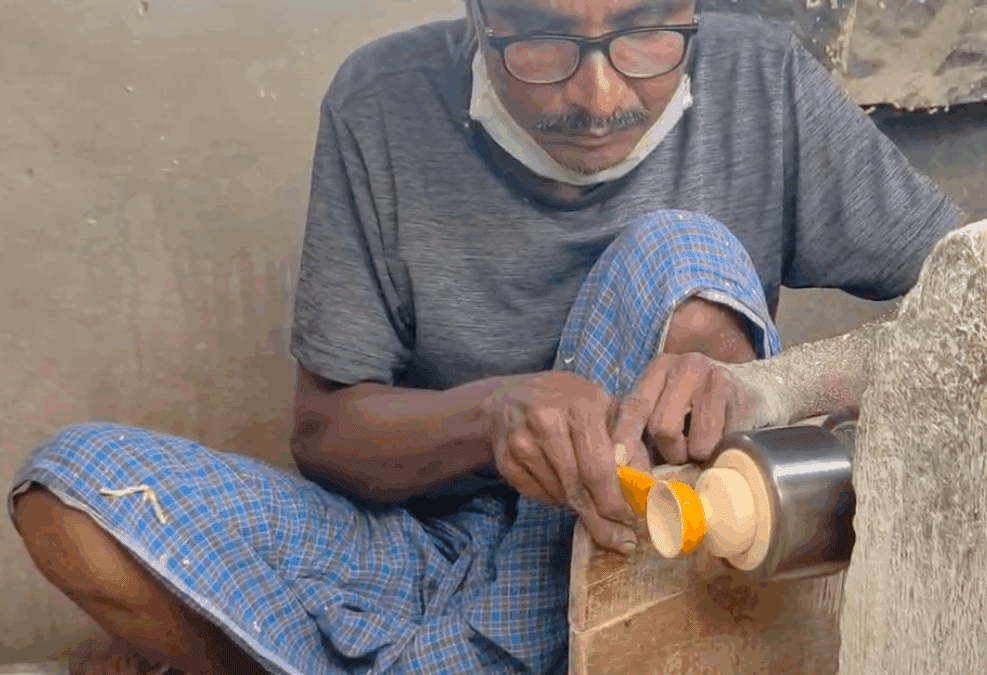
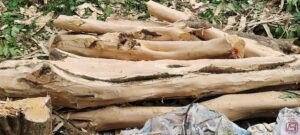
There are about 100 artisan families in the village, working on and practicing the craft. Similar to its Karnataka cousin, the more famous Channapatna, the artisans work on natural ivorywood (botanical name: Wrightia tinctoria) to create the striking pieces.
Nani Pedapati, Club Artizen’s partner, does not remember a time when the household did not make Etikoppaka toys.
‘Must be generations old,’ he says. His family, like most others, are all involved in the making of the Etikoppaka products. History traces the craft back to the 18th century, when it moved to its current location, having proximity to the Rajah of Vijayanagara, great patrons of the art.
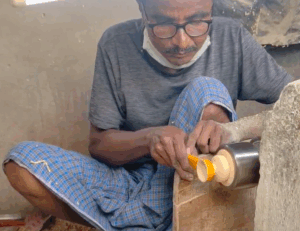
The process is done from start to finish in and near the village: the wood is harvested, the dyes made naturally, and the toys shaped and coloured. The basic colours are made through natural methods: boiling the seeds of the Bixa tree provides the red colour, while turmeric is used for yellow and indigo for blue. Iron rust and jaggery combined yield the characteristic black used for minute painting on the toys.
While many families have had to resort to acrylic colours, a few families, like Nani’s, stick to natural dyes. ‘It’s a time-consuming process, and each toy is worth it, being sculpted by humans,’ says Nani.
Earlier, the craft mainly made toys; however, of late, different products are being explored.
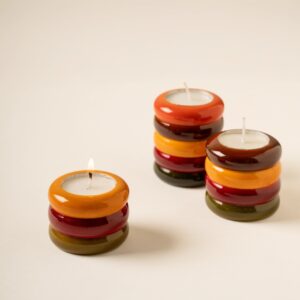
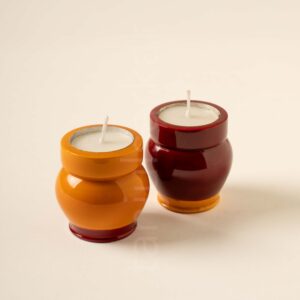
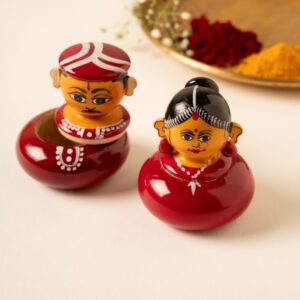
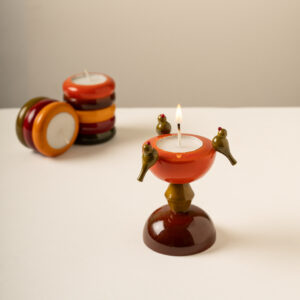
Club Artizen partners with Nani Pedapati’s family to offer festive products that signify prosperity and well-being. Our tealight holders are a perfect fit for festive hampers, and the bride and groom set is a perfect wedding return gift.
Our Etikoppaka Products
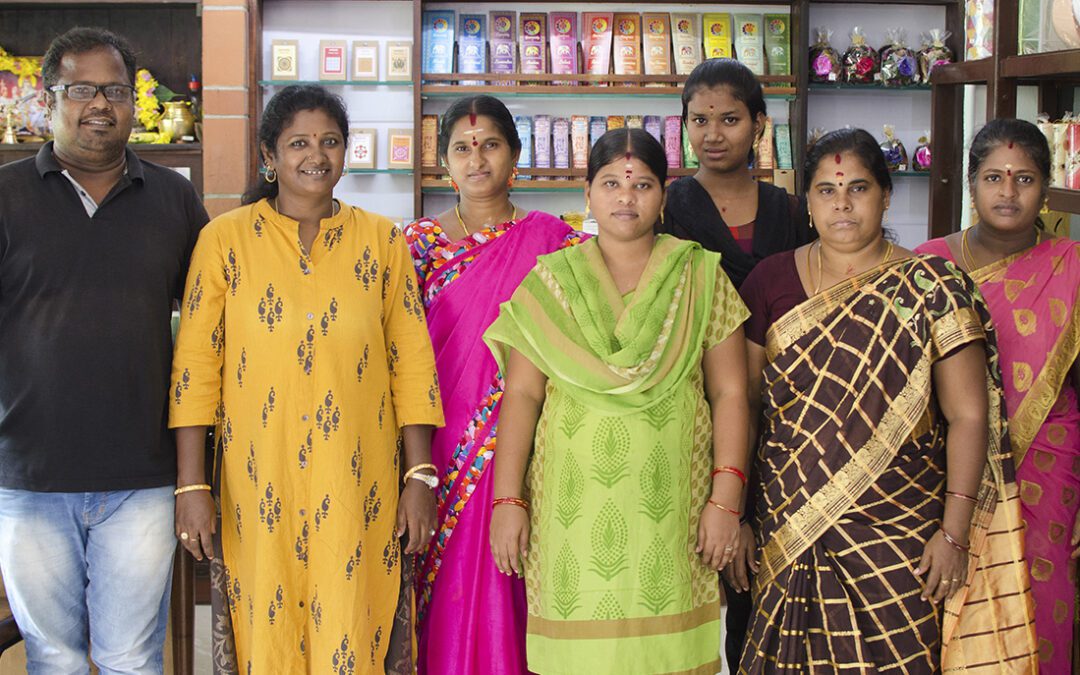
Kalaiselvi and Murugan of Pondicherry were just married when the idea of their own enterprise took root. As a teacher who had taught claywork to children, working on things like cups and candles, Murugan was ready to take the leap.
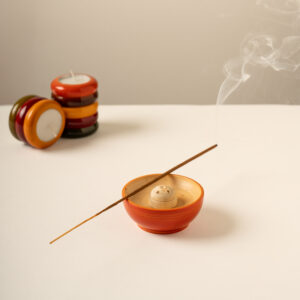
Now, 27 years later, they are still going strong with their offerings of perfumed candles, sachets, incense sticks and other fragrances. With natural pressed flowers and essential oils, their range of candles are a big hit in India and overseas! Their terracotta diya candles with pressed flowers are a bestseller during the Festive Season.
‘The enterprise is our first baby,’ says Kalaiselvi. The couple has been through a lot and Kalaiselvi remembers trying to sell the product to boutiques around Pondicherry. Now, the enterprise is mostly into exports and works minimally on domestic orders.
They provide employment to ten women, most of whom have been with them for more than 10 years. ‘People join us and don’t leave unless they absolutely have to. It’s like a family here!’ she says.
Our Terracotta Diya Products
Walk through any traditional home in Karnataka, and you might find a doorframe dressed with colour, geometry and memory. That’s what Kasuti embroidery feels like—an art that doesn’t raise its voice, but draws you in with quiet precision.
Kasuti (from kai – hand, and suti – cotton thread) is said to have begun in the royal courts of the Chalukya and later the Mysore kingdoms. Women, often without formal design tools, counted threads on their sarees to create palaces, temple towers, oil lamps, elephants, birds and tulsi kattes—each stitch a tribute to the world around them. What makes Kasuti remarkable is its discipline: no knots, no loose ends, and generally reversible.
There are four stitches that make up this language—gavanti, murgi, negi and menthi. They sound simple, but when repeated with mathematical accuracy, they turn saree borders into poems. Brides once wore Ilkal sarees embellished with Kasuti to symbolise devotion, fertility and protection. Over time, though, as machine work replaced handwork, Kasuti slowly stepped into the background.
That’s where the Club Artizen Kasuti Toran steps in—not as a substitute for this heritage, but as a way of inviting it back into everyday life. Sourced from a social enterprise in Karnataka, the toran is machine embroidered, but brings back the visual vocabulary of Kasuti—its grids, motifs and symmetry. The result is something familiar yet new: a door hanging that carries the spirit of a craft without putting pressure on the craftswomen.
In a world of fast-changing décor, the Kasuti Toran from www.clubartizen.com is a gentle reminder that tradition doesn’t always need to stay in museums or wedding trunks. Sometimes, it can live right above your door—silently holding centuries of artistry in its folds.
Our Kasuti Products
The Irulas are famous for one thing: catching squiggly little creatures on the ground, getting their essence out, and putting them back where they caught them, so the snakes and the people around them can thrive.
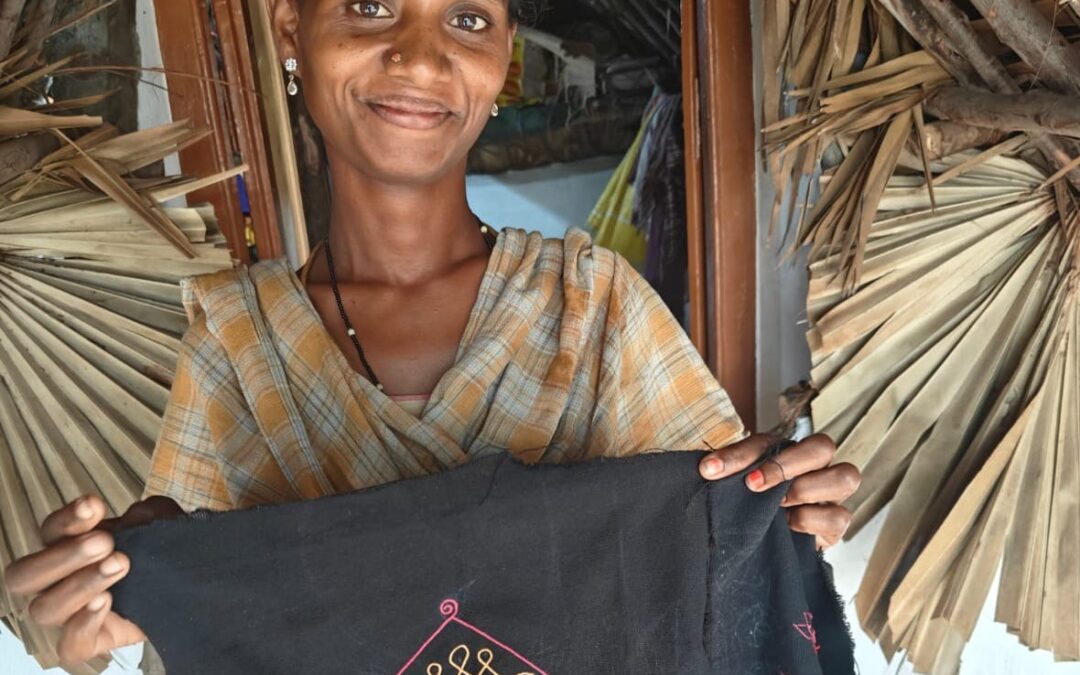
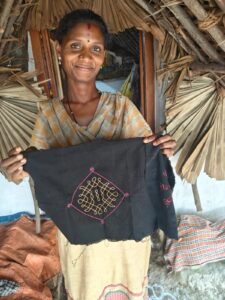
Perhaps the ladies of Irula hamlets in Kunnappattu, Anna Nagar and MGR Nagar in Mamallapuram are inspired by the snake catchers among them. For they too take the squiggly kolam drawn on the ground and capture its essence on cloth.
The project started in 2012 with Curtis John Degler, an American philanthropist, and Kala Viswanathan, a tailoring teacher skilled in embroidery based in Mamallapuram coming together, to explore alternative livelihood opportunities for the Irula community. John had already worked with some of the hamlets to provide basic assistance: constructing pucca homes and water systems and enabling after-school education, etc. Soon, he also helped the women access a livelihood through an interesting project called Kanimar, named after their tutelary goddess.
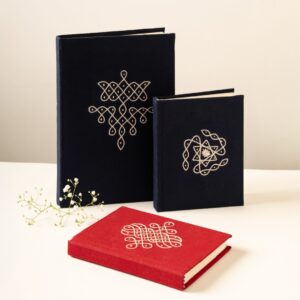
Club Artizen partners with them on a line that spotlights ‘sikku kolam’ a unique style of rangoli where lines are drawn around the dots, and not using them.
Creating the kolams on fabric is not easy, say the artisans. ‘Unlike in real life, embroidering the dots is more difficult than the lines,’ says Kanimmal, one of the artisans.
They train on cloth, and then stitch them into pouches, bags, and other products. Club Artizen is working with the group to especially design and launch a line of stationery and other products.
Our Kolam Embroidery Products
The Bhoomika Project in Madurai doesn’t look like a typical workshop. There are no large machines or long production lines. Instead, there are about ten women with intellectual disabilities, who spend their day dyeing, drying and stitching fabric one piece at a time. This routine is their work, their income, and something they take quiet pride in.
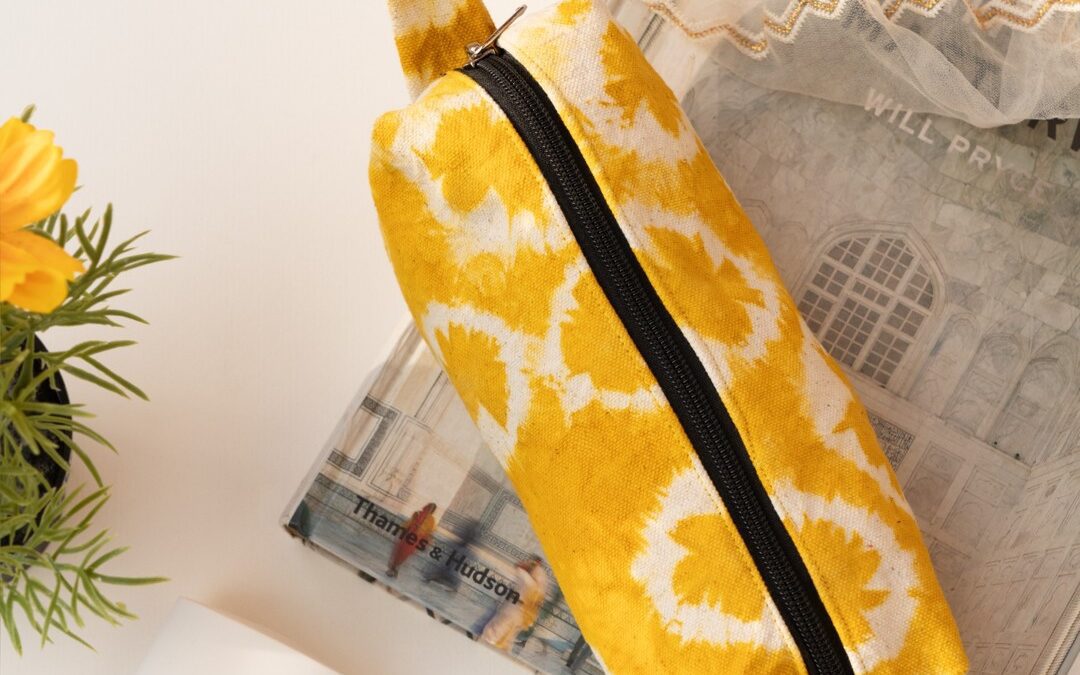
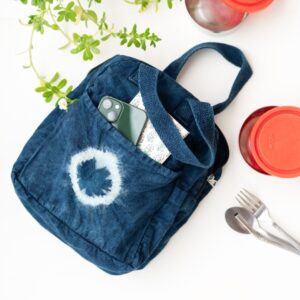
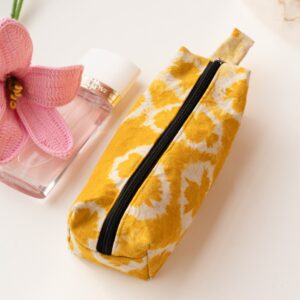
At Club Artizen, we don’t design these products—we simply make them available to a wider audience. The women at Bhoomika create two items we carry: naturally dyed yellow pouches and indigo lunch bags. Each one is made using simple tools and natural dyes sourced locally.
Nothing here is rushed. Fabric is tied, dipped, washed and stitched in small batches. The finished pieces may not be perfectly uniform, but that is exactly what makes them real and human.
By selling these products, we help the project pay the women on time and continue running consistently. It’s not a large-scale operation, but it is steady, honest work that gives the makers both income and a sense of purpose.
Our Bhoomika Products


 In June 1994, the Clean Upper Dharamshala Programme (CUDP) was formed.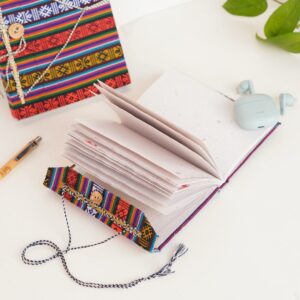
 While many families have had to resort to acrylic colours, a few families, like Nani’s, stick to natural dyes. ‘It’s a time-consuming process, and each toy is worth it, being sculpted by humans,’ says Nani.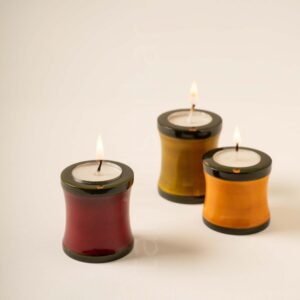
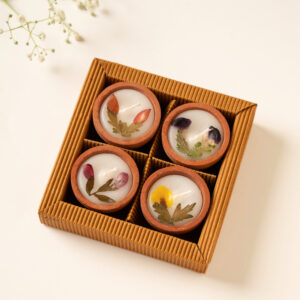 Now, 27 years later, they are still going strong with their offerings of perfumed candles, sachets, incense sticks and other fragrances. With natural pressed flowers and essential oils, their range of candles are a big hit in India and overseas! Their terracotta diya candles with pressed flowers are a bestseller during the Festive Season.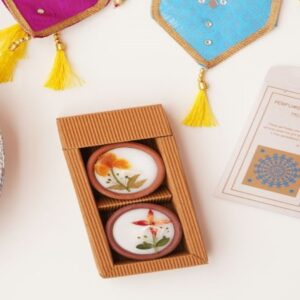
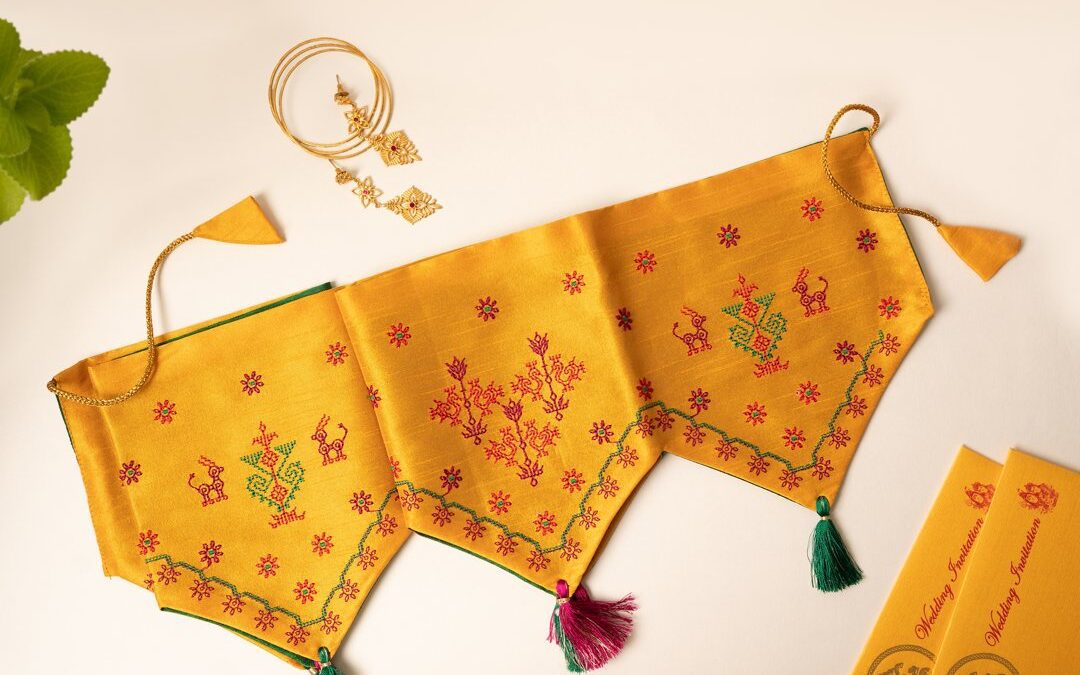
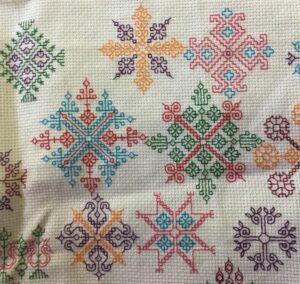 Kasuti (from kai – hand, and suti – cotton thread) is said to have begun in the royal courts of the Chalukya and later the Mysore kingdoms. Women, often without formal design tools, counted threads on their sarees to create palaces, temple towers, oil lamps, elephants, birds and tulsi kattes—each stitch a tribute to the world around them. What makes Kasuti remarkable is its discipline: no knots, no loose ends, and generally reversible.