
When Rohit Rathod’s grandfather came to see his grandmother to seek her hand in marriage, his family did not see the prospective bride. Instead, they looked at the embroidery of her attire! Rohit says it told them all they needed to know about the girl: her attention to detail, her sense of aesthetics, and whether she would be a good daughter-in-law.
‘We cannot try that now,’ laughs Rohit, whose initiative focuses on reviving the traditional embroidery form, ‘but you can imagine how important the craft was in those days.’
Banjara embroidery is a distinct form of needlework characterized by the addition of accessories, such as cowrie shells, mirrors, coins, and other embellishments, to the main stitches. Patchwork and bright colours with a predominance of red are hallmarks of Banjara embroidery.
Rohit started creating Banjara embroidery products with a modern twist. All women of his village, and indeed, of his community, know how to do Banjara embroidery, but very few thought of it as having any commercial value, he says.
‘In fact, they gave away many of their heirloom embroidery products in exchange for things like stainless steel plates. They were so innocent of its real value,’ says Rohit.
Rohit was inspired by his grandmother to take on the popularization of the craft and to revive it to his heyday. This was around four years ago, when COVID had struck. He started out small, with his family. First, he learnt all the embroidery stitches, around 70 of them, from his grandmother. He then started training women in his village. They already knew basic embroidery, and all he had to do was train them on some more traditional factors of the craft, and on finishing. He currently works with 25 artisans and counting.
Ironically, when he trains, he has to train women to go back, to when their grandmothers did the embroidery. ‘The craft itself changed over time, and more mirror work crept in. In our traditional embroidery, the stitches are different, and we work on cotton,’ he says. He is trying to bring back the OG form of banjara embroidery, albeit with better finish.
Rohit is hoping for the new generation to pick up Banjara embroidery not just as a one-off statement, but make it a part of everyday life. Towards that end, he wants to focus on functional Banjara embroidery products and Banjara embroidery gifts.
Talking about the partnership with Club Artizen, he says the design inputs given, especially for the Banjara embroidery luggage tag, were very helpful. ‘Our bestsellers are jewellery, and because we are surrounded by it, we sometimes cannot think beyond what we have seen. We are happy that Club Artizen is able to give us new ideas for our products,’ he says.
<hr />
<h1>Our Banjara Embroidery Products</h1>
If you ever walk into Sai Kiran Dhanalakota’s home in Hyderabad, the first thing you notice is the colour. Brushes, half-finished scrolls, wooden masks drying in the sun — all part of a fading world that his family has kept alive for generations. Cheriyal painting isn’t just an art form here; it’s how stories were once told. Before cinema, before books in every hand, wandering storytellers would carry long painted scrolls made by families like his, singing epics from one village to another.
Sai Kiran grew up watching his parents mix tamarind seed paste and white mud to prepare cloth for the scrolls. No canvas, no factory colours. The cotton is coated, dried, coated again, and only then does the drawing begin — strong black outlines, then vivid reds, blues and greens made from natural pigments. Every figure has wide eyes and rounded faces, every scene crammed with life — gods, farmers, animals, brides on palanquins.
After the traveling scrolls were replaced by other items that told stories: boxes (and now panels, ironically), the art moved to different mediums: as masks, art plates, on products, on canvas, and on cloth.
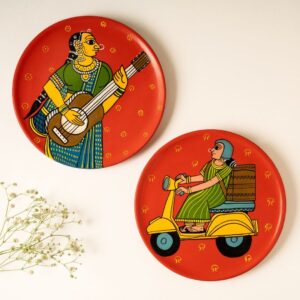
With Club Artizen, Sai Kiran and his family have experimented with different products reflecting the ethos of sustainability. Old, unwanted CDs became tealight holders with Cheriyal figures dancing around the flame. Coasters with mythological characters and village scenes found their way to city homes. And then came the playful series — a Cheriyal woman riding a scooter, and playing the guitar. Still the same big eyes, still the same red background, but living in today’s world.
When Kairavi Shahu started work on the exclusive vegan leather line for Club Artizen, the task seemed simple: use natural products, and create lifestyle products that appeal to all. After all, she had been working for the revival of traditional dyeing techniques like Shibori and had created a home décor line, among other products.
Kairavi and Anita Hariharan, co-founder of Club Artizen, started work on the wallet, they noted the specifications that were to characterize the products.
✔Must be as eco-friendly as possible.
✔Must work for men and women.
✔Must be durable (for everyday use).
The team zoned in on a few products: wallet, passport holder, business card holder, and a luggage tag.
What seemed like an easy task was actually quite challenging, as the journey of sustainability often is. The biggest challenge? Achieving an aesthetic and durable product from handmade fabric.
Handmade, hand-dyed fabric is usually delicate and soft and to give the fabric the required stiffness and durability was a challenge. This was especially true of the passport holder and wallet, which had several layers: the outer hand block-printed fabric, the inner leather, the lining, and the interlining.
The other challenge was coming up with an aesthetic that would work for all.
‘It was interesting to note how different men and women see products. Based on market feedback, we went back to the drawing board and made some changes,’ says Anita.
After a few tries, the team emerged with a winner!
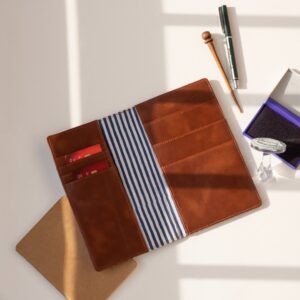
For the passport holder, for instance, the inner layer is made from vegan leather, and the interlining from natural rubber. The outer layer is made using hand block-printed fabric, and the product comes in two neutral shades.
The products are made in stages by women artisans: the block-printed fabric is sourced from the units in Rajasthan, and is cut by women artisans who work from home. The cut components are then taken to the stitching unit in Jaipur, where other women artisans stitch and finish the product, ready for shipping.
‘The great thing with the vegan line is that it’s a pleasure to use, and is also easy to maintain and wash,’ Kairavi says.
The Club Artizen Vegan Line is now available in its own Sohrai gift box, encapsulating the power of collaboration, eco-consciousness, and the enduring legacy of Indian art.
After school, Taher Siddiqui, then nine, would go directly to the karkhana (factory), helping his father with the craft that would come to define his life: Bidri art. Now, his son does the same.
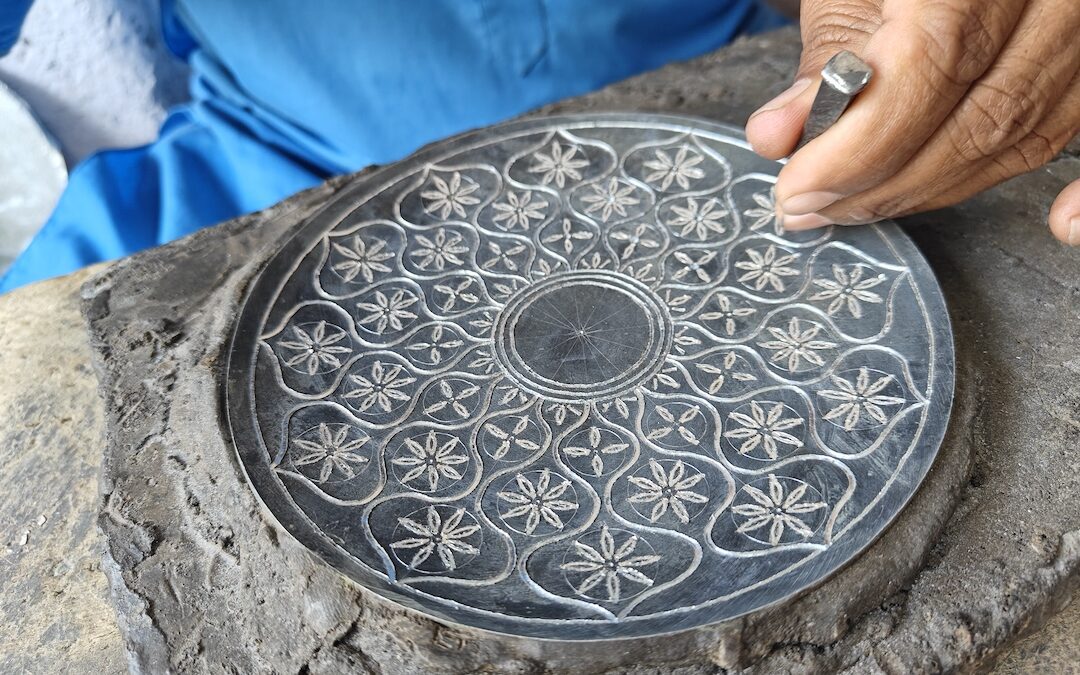
Bidri, which means “from Bidar” is an art form that has its roots in Persia and is part of what is called Koftgiri art, i.e. inlay of one metal (usually gold or silver) on to another metal, mostly iron. This art was greatly encouraged by the Bahmani Sultanate, and flourished under their rule in the 14th and 15th centuries.
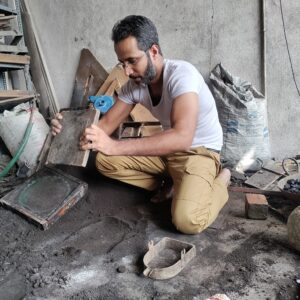
Bidriware has been part of Indian art and craft since then, and even as kingdoms changed, the art form grew in strength and complexity. Today, it is a GI-tagged art form that has evolved over time and is looking at a shinier future.
Taher Siddiqui is part of that future. He does not remember how many generations have been working on the craft, but says he recently came across a paper from 1917 for a Bidri workshop registered in the name of his grandfather. After having trained under his father, he then studied abroad, before returning to India to take the field of Bidri further.
‘I always knew I would work here, in this craft. It’s in my blood,’ he says. Taher Siddiqui, whose company Mahboob Bidri Craft works on various new products, is also the laboratory for new ideas.
Taher is full of them. He works with corporates to provide bulk gifting, and also creates large artistic pieces that bend reality. His pieces have won several awards including a Global Impact Award given by Creative Dignity and the AD x JSW Prize for Contemporary Craftsmanship.
With Club Artizen, he and his team have created several accessories for men, including tie pins and cuff links.
While creating masterful ideas, Taher is also mindful of the toll the craft takes on its practitioners, including inhalation of smoke during the smelting process, accidents during buffing and smoothening processes, and other occupational hazards.
Club Artizen’s partnership with Mahboob Bidri Craft is envisaged as a deep relationship that will work to maximize the potential of the craft itself.
In the quiet village of Zura, the rhythmic clang of hammer on metal still echoes through the lanes. Here, in his workshop, Javed Abdullah shapes sheets of iron into the famous Kutch bells, a craft his family has practiced for generations.
When we met him for Club Artizen, Javed was almost bemused by the attention.
“We have been doing this for many, many generations,” he said with a smile. Along with Zura, only two other nearby villages still make these distinctive bells.
Traditionally, the bells were tied around the necks of cattle, goats, and the like. Each had a unique size and tone, identifying not only the type of animal but also its owner. Today, their role is mostly ornamental—though farmers and shepherds still use them in parts of Kutch.
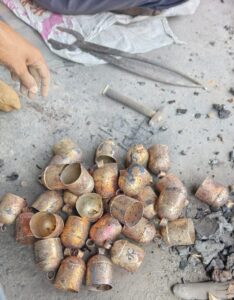
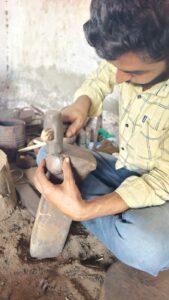
The craft is a community effort. While the men beat iron sheets into shape, the women of the Lohar community prepare the clay coating that is vital to the process. The bells are first hammered into their required form, then coated in a copper–brass mixture. A sleeve of clay-dough is applied before they are fired in a kiln. In the heat, the metal alloy melts and fuses with the iron. When the clay casing is broken away, the finished bell emerges—gleaming, resonant, and ready to sing.
Over the years, the uses of Kutch bells have expanded. Musical instruments, wind chimes, and decorative pieces now make up much of the artisan’s livelihood. For Club Artizen, Javed and his team have added a special touch—hand-embroidered sleeves that turn each bell into a perfect festive gift.
As Javed recalls, “My grandfather could identify his cows just by the sound of their bells. Today, even cowherds want their animals to wear something beautiful.” In every chime, the Kutch bell carries not just a sound, but the heartbeat of a living tradition.
Yesterday I came home with a noticeable tear on my shirt. While one part of me was in pain to let go of my favorite shirt, the other part was all frightened about how my mother would react.
But guess what?
Instead of chiding me for my carelessness, my mother simply took away the shirt to wash and dry it. The next day, she collected all the clothes that I could no longer wear or donate, and started cutting little pieces of cloth from each. What do I see? She stitched them together to make a vibrant cushion cover!
This, simply, is patchwork. You creatively convert patches/pieces of various clothes into a useful and attractive item by the technique of stitching swatches of cloth together.
But why is it so popular?
First, it is a work of beauty. You can see symmetrical patterns and designs on bed sheets, quilts or even dresses made from different materials. It is very appealing and of course, it adds to your aesthetics.
More importantly, it upcycles your cloth waste. The textile industry discards 92 million tons of waste each year. Surprisingly, only 12% of the material the industry uses is recycled.
It reduces the textile waste entering water bodies or landfills. The textile industry contributes 20% of water pollution and so, why go to the lakes and run drives, when you can start from your home?
With these numbers, patchwork is indeed a silver lining.
It was adopted by the fashion industry in the 1960’s not just as a technique but as a “look” of hippie culture. Its origins date much further back: nearly 3,500 years ago! It became popular in Europe and Asia over the centuries. In the 1700s and 1800s, patchwork in the New World represented major world events or biblical scenes on bed sheets. These types of designs were also displayed at the Great Exhibition of 1851.
Today, with the focus on circular fashion, patchwork is making a comeback. Reality show “Next in Fashion” winner Nigel Xavier is known for his patchwork and denim creations. Women’s Wear Daily declared Patchwork as the look of 2021, and increasingly, celebrity designers are turning their attention to patchwork as well.
Apart from clothes, patchwork has traditionally been used to make various products–from pencil pouches to large comforters–and the trend is here to stay!
From being a necessity for women to stitch up little holes and repairs to being a show stopper at fashion shows, parallelly encouraging a circular economy, patchwork is a go-to for today’s conscious sustainable lifestyle.
Image courtesy: Don Mc Lean
Our Patchwork products

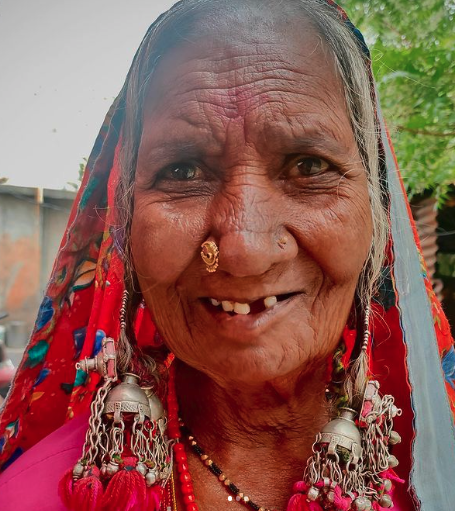
 Rohit started creating Banjara embroidery products with a modern twist. All women of his village, and indeed, of his community, know how to do Banjara embroidery, but very few thought of it as having any commercial value, he says.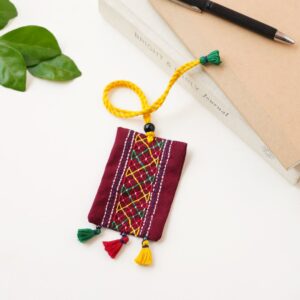

 Sai Kiran grew up watching his parents mix tamarind seed paste and white mud to prepare cloth for the scrolls. No canvas, no factory colours. The cotton is coated, dried, coated again, and only then does the drawing begin — strong black outlines, then vivid reds, blues and greens made from natural pigments. Every figure has wide eyes and rounded faces, every scene crammed with life — gods, farmers, animals, brides on palanquins.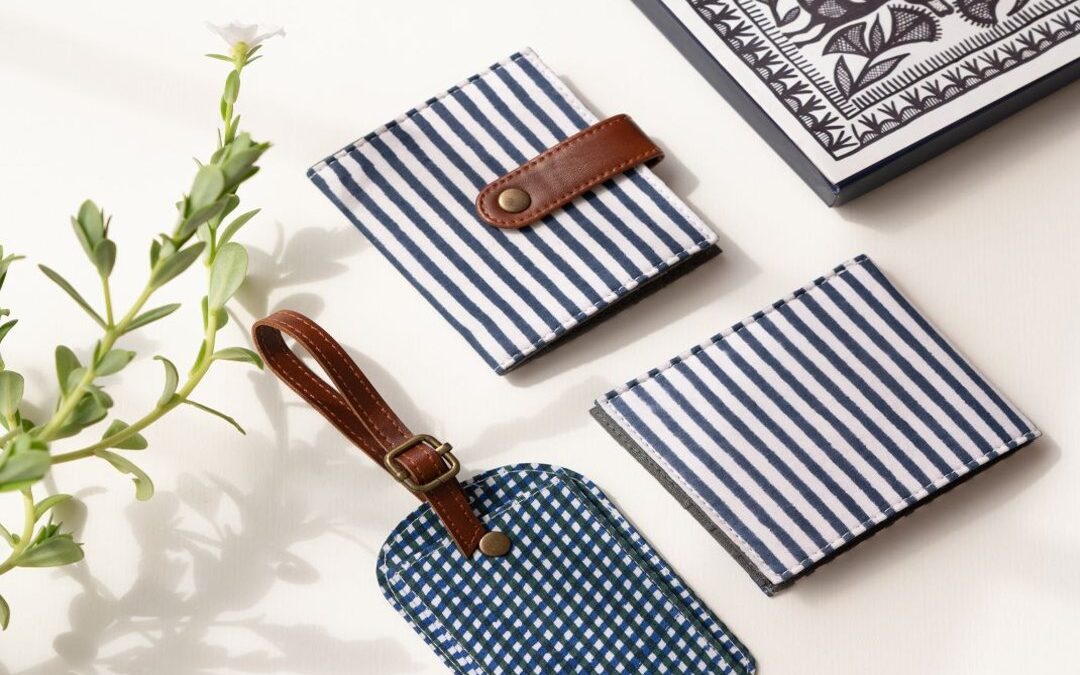
 Bidriware has been part of Indian art and craft since then, and even as kingdoms changed, the art form grew in strength and complexity. Today, it is a GI-tagged art form that has evolved over time and is looking at a shinier future.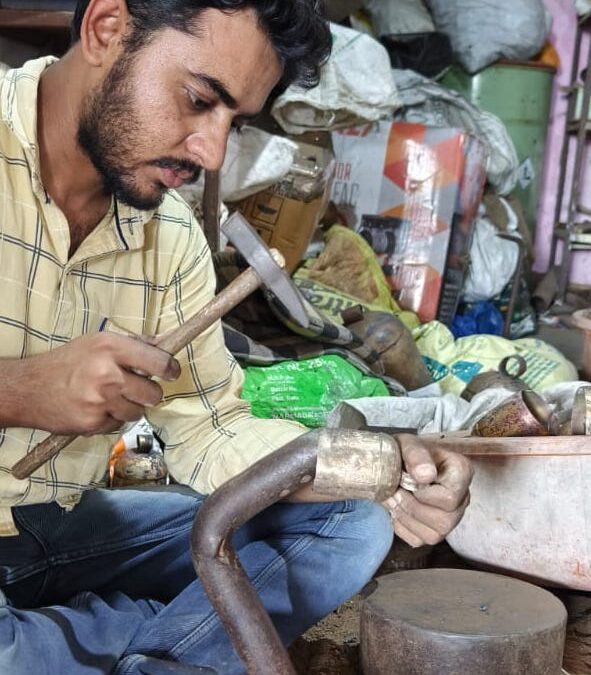
 The craft is a community effort. While the men beat iron sheets into shape, the women of the Lohar community prepare the clay coating that is vital to the process. The bells are first hammered into their required form, then coated in a copper–brass mixture. A sleeve of clay-dough is applied before they are fired in a kiln. In the heat, the metal alloy melts and fuses with the iron. When the clay casing is broken away, the finished bell emerges—gleaming, resonant, and ready to sing.

