For twenty years, the Rehoboth Home for the Mentally Disabled have been working with women who have been lost or abandoned, with a primary focus on rehabilitation and reuniting with families.
It’s a long, arduous journey and no one knows that better than Sumita Verghese, coordinator at the home.
 With over 50 women in the home, it becomes imperative to harness their skills, says Sumita. The livelihood program that makes these bags are a way for the women to create something meaningful. The women are taught various skills depending on their capabilities, and they come together in their workshop to create handmade products.
“Many may think they are not capable, but if our experience of the past twenty years is anything to go by, it is that these women are organized and dedicated and can accomplish anything they set their mind to,” says Sumita.
They make beautiful tote bags that are easily foldable and can be stored in your bike, created with a great sense of passion and purpose.
Many of the women have been found on the road with no idea of how they came to be there, some of them pregnant. Reuniting with the family remains the goal of Rehoboth, with around 140 women reunited with their families.
“That is certainly the high point of our work–seeing the families whose faces light up when they see their long-lost daughter,” says Sumita.
Of late, we have been hearing a lot of the word shibori. If the name doesn’t sound very Indian, it’s because it isn’t!
Shibori is a Japanese resist dyeing method that made its way to India in the early 20th century; some say through Rabindranath Tagore! It’s now practiced in Rajasthan, Gujarat, and Delhi.
The earliest Japanese shibori samples are from the 8th century. By the 18th century, there were about 150 different types of shibori techniques in use, and today, only about 70 remain. Like in India, there are people trying to keep this art form alive. Shibori comes from the Japanese word “Shiboru” which means “to wring, squeeze and press.” Shibori creates beautiful designs by tying, stitching, folding, or compressing the fabric.
It looks similar to tie and dye, and it is. One of the shibori techniques is very similar to bandhani, the 5,000-year-old resist dyeing technique. Now, Shibori has been added to our repertoire. Shibori’s blue is a throwback to the time the colour came from the indigo plant from which the ink was extracted. Today, it is not uncommon to see brightly coloured shibori, although purists scoff at the idea.
There are 6 major types of shibori techniques.
Kanoko Shibori
Kanoko Shibori
It is simple and close to the tie and dye technique.
Different shapes and patterns are formed with the help of strings and rubber bands.
Arashi Shibori
Arashi Shibori
Arashi means “storm” in Japan. Look at the picture and you can easily guess why.The cloth is first tied to a pole or PVC Pipe and then wrapped around by a strong yarn or strings to create those beautiful designs as the ink passes around them.
Itajime Shibori
Itajime Shibori, courtesy brooklynbrainery.com
Itajime means “board-clamping” and as you might have guessed, two pieces of carved wood with design clamps the fabric. This gives the fabric a symmetrically elegant design as the wood resists the dye.
Kumo Shibori
Kumo Shibori, courtesy dabble.co
Doesn’t this look like a spider web? That’s exactly what it represents!
Here the cloth is pleated, twisted, or folded, and then tied with a string/rubber band to achieve the design that looks like a web.No standard pattern exists,but it’s in the hands and minds of the artists.
Nui Shibori
Nui Shibori, image courtesy anandistrunk.com
In this type, the cloth is stitched as per the desired pattern and the threads are then pulled together to gather and ink the cloth.
This gives greater control on how similar the pattern will look on two different pieces.
Miura Shibori
Miura Shibori
This technique uses hooked needles which are used to pull together strings and then bind them.A ring is made with ten threads and they usually move from row to row.
At the end the pattern resembles water ripples.
Every design is unique on its own depending on where and how the threads are tied.
There are several more techniques of shibori, some of which are variations of the ones above. Now, you can check out our collection and see if you can identify the type of shibori!
Featured image courtesy: Teona Swift
Our Shibori products
One small village and five women. COVID. A passion to make something of themselves. One person to bring it all together in interior Karnataka.
That’s Bannada Dhara—meaning coloured thread in Kannada—a small initiative to bring sustainable livelihoods when things got bad during COVID.
When she saw women in her village lose their livelihoods during COVID, Lavanya, saw an opportunity in a tailoring unit, especially making bags and masks. She got together a few women, and they went about this for a few months, slowly expanding their repertoire. Now, five women work with her—three full-time, and two students come in as interns, designing and working with different products.
For Club Artizen, Bannada Dhara created cloth shagun envelopes using a variety of fabrics. These elegant shagun envelopes are reusable and elegant, perfect for any gifting occasion.
Pics courtesy: Lavanya J
Our Bannada Dhara Products
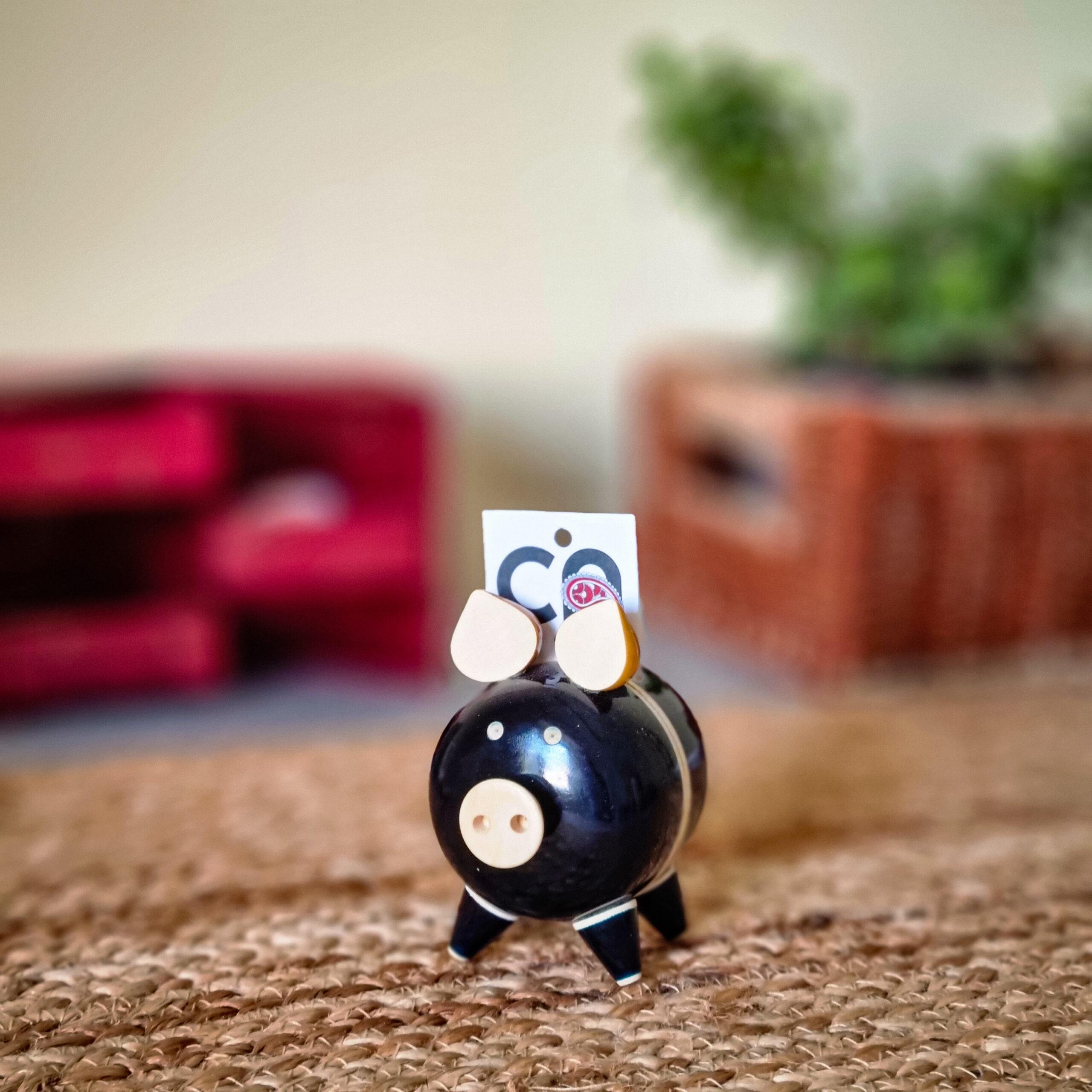
The word “Channapatna” literally means “good town”, but the more colloquial name for it, gives a better idea of what the town is all about: “Gombegala ooru,” or place of toys!
Channapatna is known for its wood lacquered toys, made using natural colours. Safe for children, these toys are popular in India and abroad. The streets of the town are full of the toys, and there is also a craft park that spotlights artisans.
One organization stands out for the way it has structured the economics of it all: Artisan’s Pride, a producer company that the artisans own.
Uma, 38, who has been with Artisan’s Pride for the past fifteen years, says she is happy about the new development. “It feels good that we are part owners of this organization we have been with for so long.”
While women like Uma were from the region, and knew about the traditional Chennapatna toys, they did not know how to make them. Now, with Artisan’s Pride, they are deeply embedded in the ecosystem of the Chennapatna toys.
Artisan’s Pride is careful about the environment, ensuring that they procure wood, colours, and other materials only from sustainable sources. They only harvest hale wood from non-farm non-forest lands, and use only natural dyes such as turmeric, Kumkum and indigo. All colours are blended from this. While this means that the toys do not feature billions of colours, as other toys, it also means that they are super safe for children.
Summer means mangoes, heat, and travel!
Whether you travel to your relatives’ homes, Ooty, Shimla, or Paris, you always heave a sigh of relief when you return home.
Club Artizen’s Travel Box lets you take a piece of our heritage wherever you go.
Carefully curated with craft-inspired products from across the country, the box is a limited-edition product that is eminently giftable to those bitten by the travel bug! Some of these products are exclusive to the box, and are not available on the store!
The Travel Box comprises:
- A cord organizer
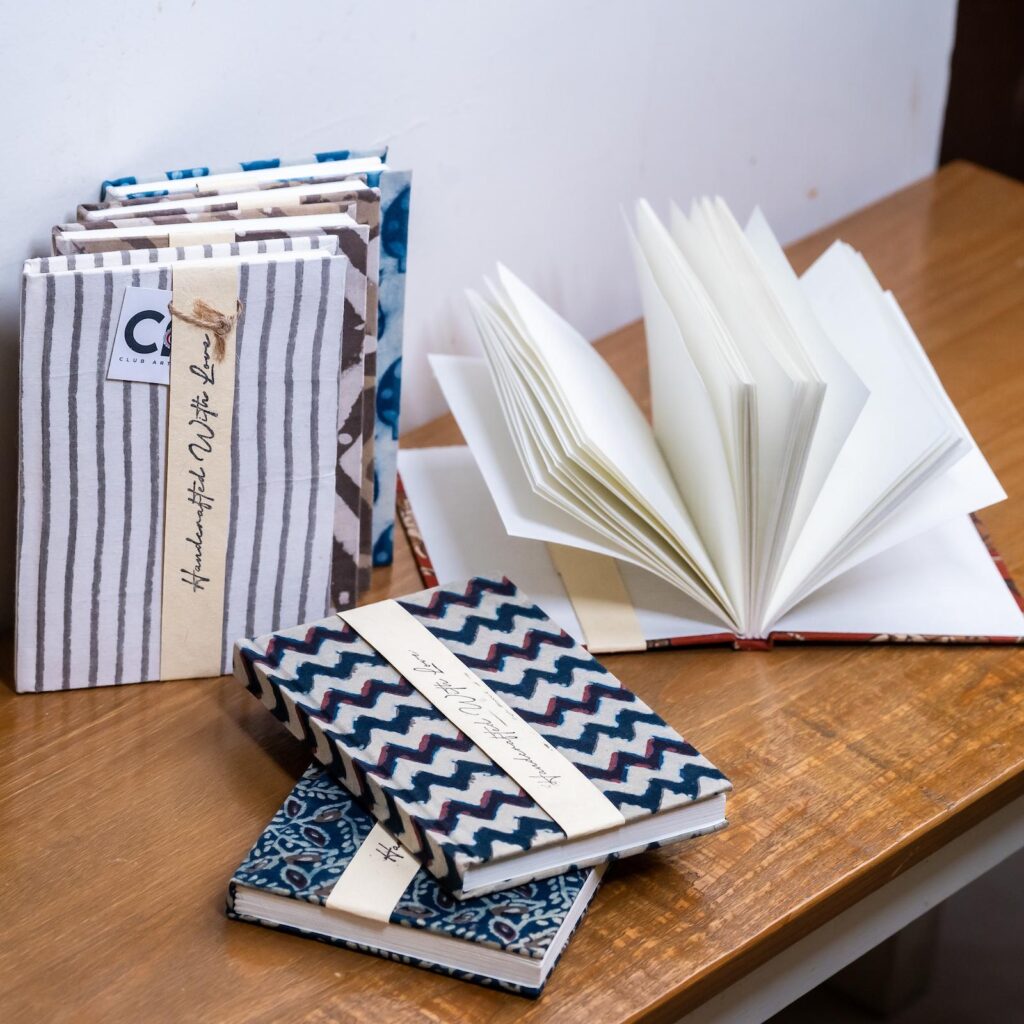
- A block printed handmade paper diary and a bamboo pen
- A travel pouch to store toiletries and
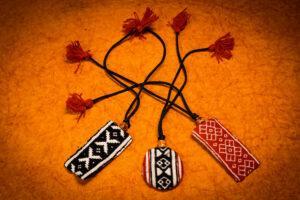
- A Toda embroidered luggage tag
The cord organizer is specially designed by Club Artizen to keep your cables secure. They are made from scrap fabric by a women’s livelihood project in and around Jaipur. The product was designed keeping in mind a common problem faced by travellers: rummaging around to find their cables all entangled!
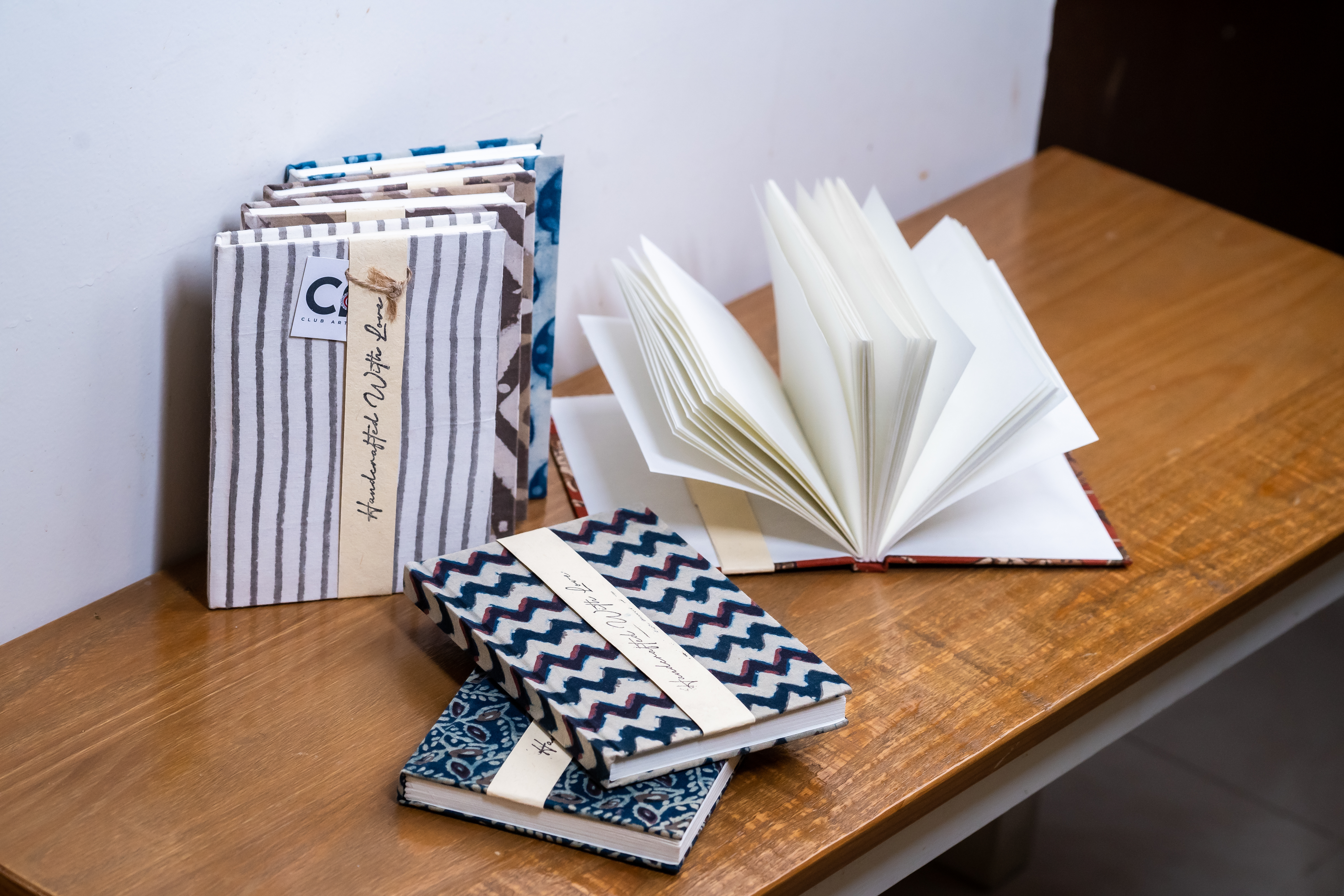
The same project also brings to you the block printed handmade paper diary. The cotton of the diary covers are block printed by the women of the project. Learn more about the project here. A sleek bamboo pen goes with the diary and is part of the box.
The travel pouch is also brought to you by a craft project from Western Rajasthan. It is part of a larger trust, one that started off as a milk producers’ cooperative nearly 40 years ago. The Trust started with health and education, but after the devastating famine of 1987, where half the livestock of the area was wiped out, the organization expanded its mandate to include the overall development of the area, including alternative livelihoods.
The Toda embroidered luggage tags are created by the women of the Toda tribe of the Nilgiris. Their intricate work and distinctive black-and-red embroidery are a reminder of the amazing craft diversity of India. Our partner works with the Toda women to create products that can become a part of our everyday lives. Read more about Toda Embroidery here.
Experience travel with these beautifully crafted products.
Jaipur prints, for many of us, bring to mind one type of print, perhaps the ones we see in bedsheets.
However, when you talk to Kairavi Shahu, founder of Leera, you realize the mind boggling variety of printing, dyeing, and stitching techniques practiced in just one part of Rajasthan! The richness of Indian textile art hits you once again.
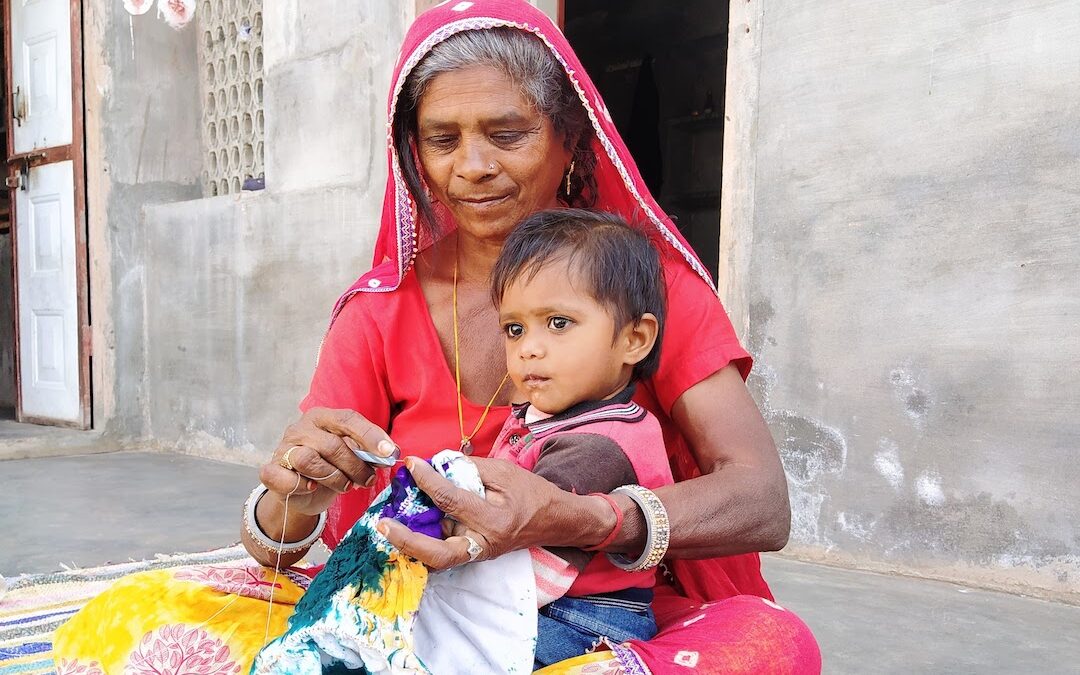
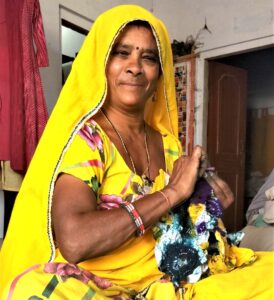
Leera (Livelihood Empowerment and Encouragement of Rural Artisans), a social enterprise founded by Kairavi during COVID, transforms fabrics that are created using tradition hand-made techniques—Bandhni, Shibori, Sanganeri, and embroidery—into contemporary products. Incidentally, “leera” also means “scraps of fabric” in Marwari, a concept close to what the organization seeks to do.
A graduate of textile design from the National Institute of Fashion Technology, Chennai, Kairavi visited Sujangarh for her graduation project, and simply stayed back.
She works with rural women, and is trying to revive the craft of dyeing by hand and hand block printing, among other traditions.
One of these women is Rubina Sultana, who joined Leera in 2021. A graduate of biology, Rubina married into the village of Bichoon near Jaipur, and was looking for opportunities to work, when someone told her about Leera. She came in and worked hard, and is now one of the artisans who works on new product designs with Leera.
“When I came in, I didn’t know much. Slowly, I learnt many techniques including patchwork,” she says. She earns around Rs. 25,000 some months, and has graduated to training other artisans as well.
Kairavi says this is what the organization seeks to do—to create artisans who can take leadership roles. Some women are unable to step out of their homes, and they are able to work at home on a per-piece rate as well.
With two units each in rural Sujangarh and in Bichoon, Leera has 25 artisans on their payroll and over 400 of them work from their home, as of 2023.
Their specialty? Products made using the Shibori technique. According to accounts, the Japanese Shibori technique of resist dyeing was brought to India by Rabindranath Tagore. It has found a lot of traction within Indian dyeing techniques, as it allows for a more versatile pattern than the Bandhni technique.
The organization’s product line is limited, yet elegant. It includes table linen, stoles, laptop sleeves, etc., and smaller products such as bookmarks, patchwork pouches, and hand block printed diaries.
Leera’s dyeing artisans work completely by hand, manually tying the fabric, dyeing it, and opening the threads as well. “This process is not just tedious, it also means that sometimes, when opening the knots, the fabric tears,” says Kairavi.
This was taken as a challenge and the team came up with a line of products that utilized those and other scraps of fabric. The Leera bookmarks, patchwork pouches, and Club Artizen cord organizers are all part of that product line.
The tiniest of scrap is utilized by the enterprise, making sure that nothing goes to waste.

 With over 50 women in the home, it becomes imperative to harness their skills, says Sumita. The livelihood program that makes these bags are a way for the women to create something meaningful. The women are taught various skills depending on their capabilities, and they come together in their workshop to create handmade products.


 One small village and five women. COVID. A passion to make something of themselves. One person to bring it all together in interior Karnataka.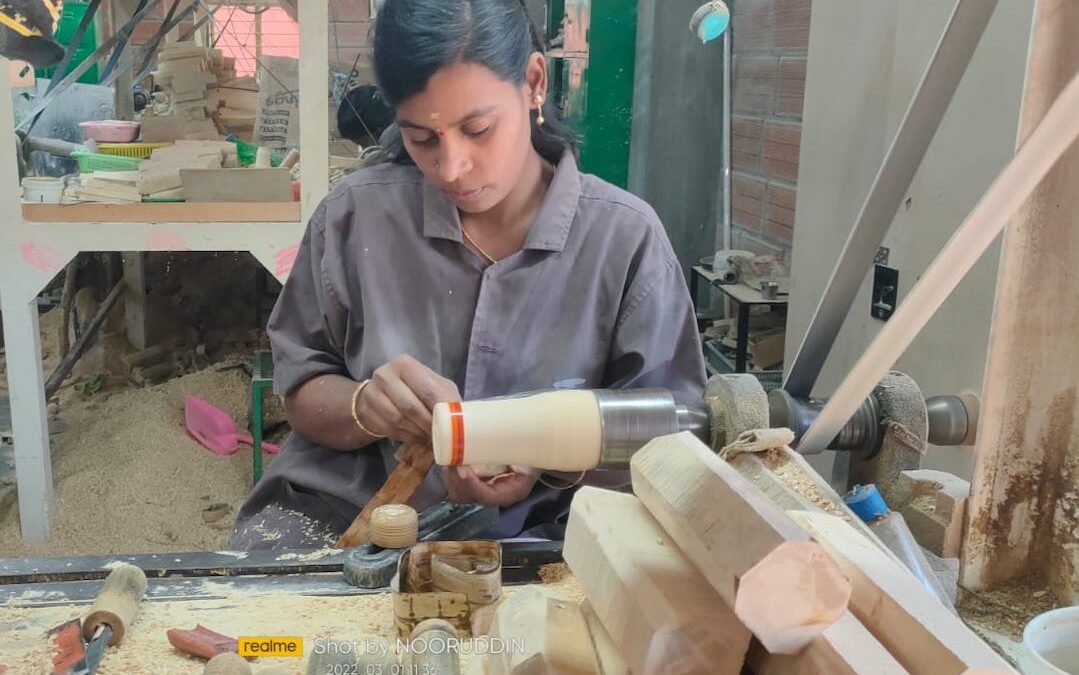
 While women like Uma were from the region, and knew about the traditional Chennapatna toys, they did not know how to make them. Now, with Artisan’s Pride, they are deeply embedded in the ecosystem of the Chennapatna toys.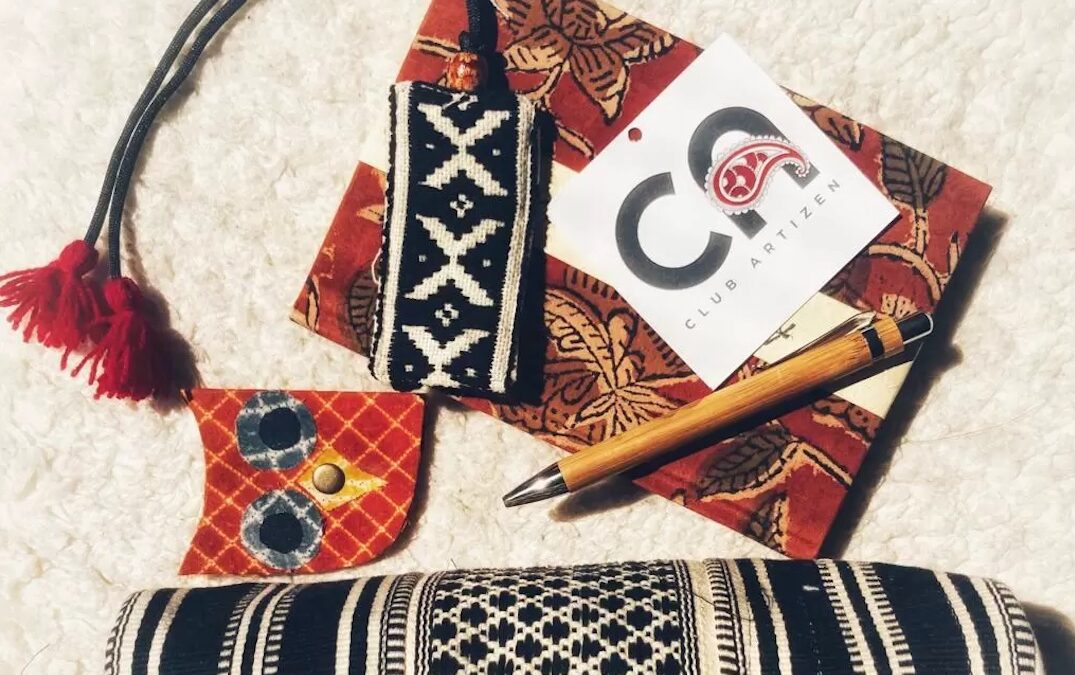
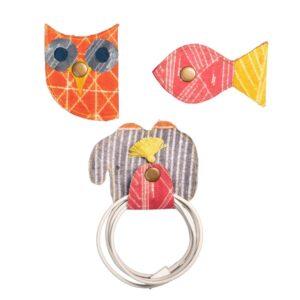 The cord organizer is specially designed by Club Artizen to keep your cables secure. They are made from scrap fabric by a women’s livelihood project in and around Jaipur. The product was designed keeping in mind a common problem faced by travellers: rummaging around to find their cables all entangled!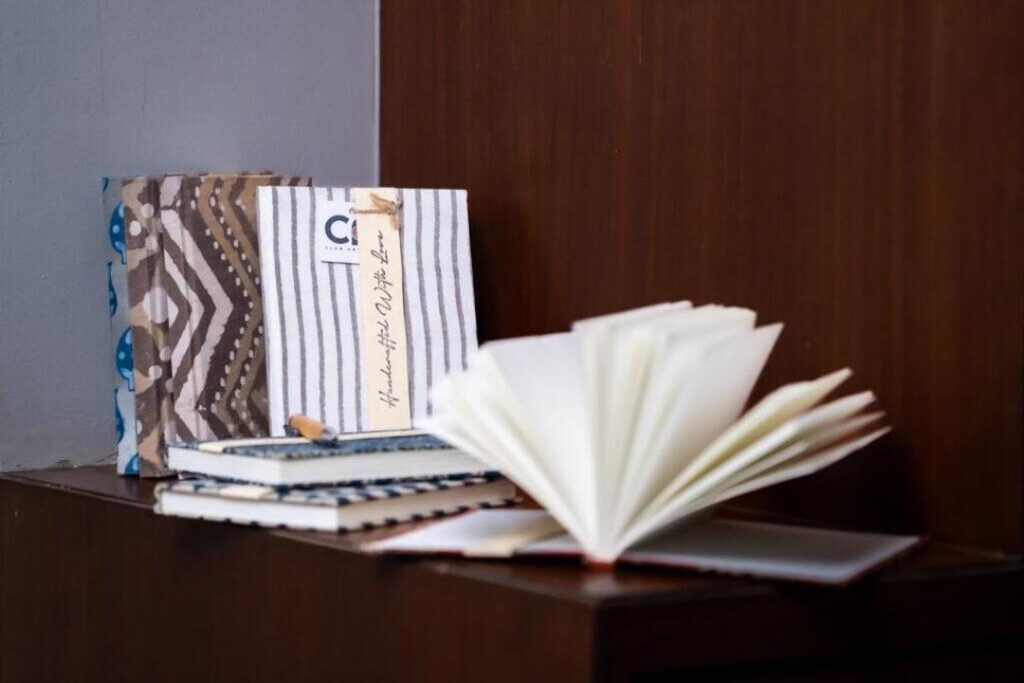
 Leera (Livelihood Empowerment and Encouragement of Rural Artisans), a social enterprise founded by Kairavi during COVID, transforms fabrics that are created using tradition hand-made techniques—Bandhni, Shibori, Sanganeri, and embroidery—into contemporary products. Incidentally, “leera” also means “scraps of fabric” in Marwari, a concept close to what the organization seeks to do.
 With two units each in rural Sujangarh and in Bichoon, Leera has 25 artisans on their payroll and over 400 of them work from their home, as of 2023.